
Personal Safety
Workplace Violence Can Escalate in Seconds: Is your Lone Worker Safety Plan Fast Enough?
In an assault, seconds can decide the outcome — and a cell phone is too slow to call for help. Here's why a discrete, palm-sized alarm device that sends a silent SOS is the safer choice for lone workers.
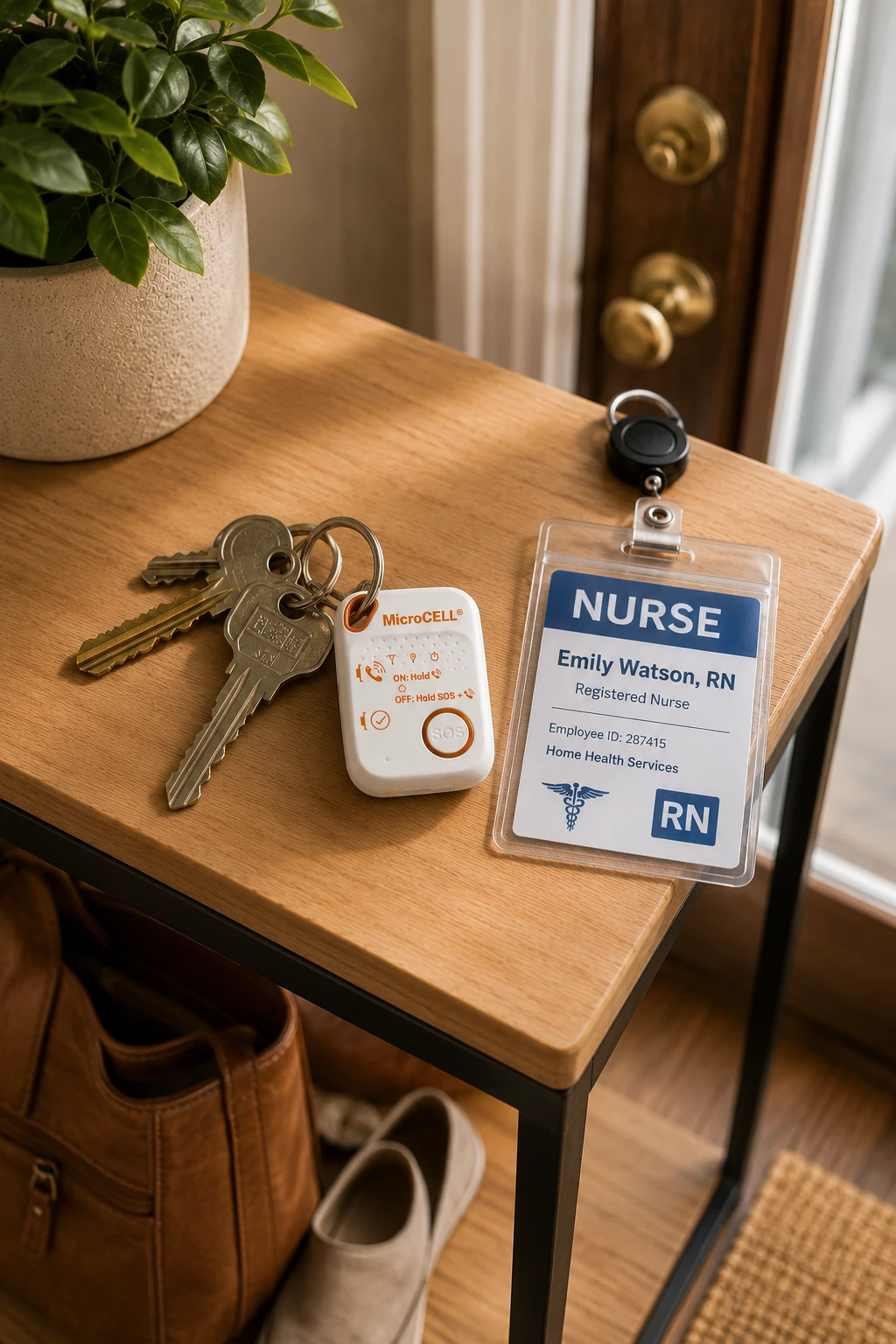
Millions of people work alone every day. Home-healthcare professionals, including nurses, step into unfamiliar houses. Social workers knock on strangers' doors. Security officers walk empty, dark corridors after midnight.
Real-estate agents show vacant properties to unknown clients. Utility crews and field technicians operate miles from the nearest coworker. Retail and hospitality staff work late and lock up by themselves at closing. For all of them, the real question is not whether help exists — it's how fast they can reach it when a threat occurs.
Most people reach for their cell phone. In a real threat of assault, that choice is often the slowest and most dangerous one available. A purpose-built, discrete personal alarm works faster, stays quieter, and is far more difficult for an attacker to notice or stop. Here's why.
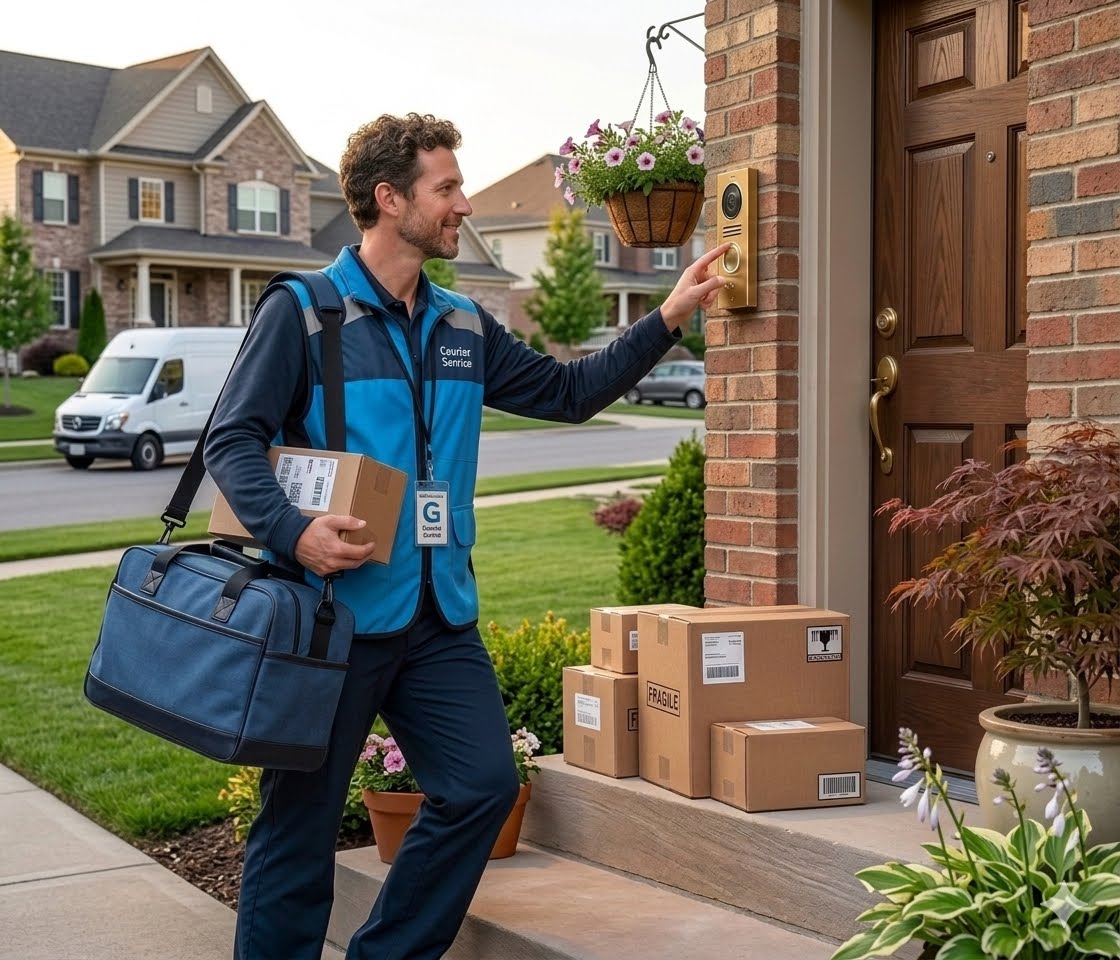
1. A cell phone takes too long to dial
Assaults rarely give warning. They explode at close range and accelerate in seconds. Now count the steps a phone demands:
Dig it out
From a pocket or a bag, while the threat is already on top of you.
Wake and unlock
With shaking hands, or a face turned away from the camera.
Open the dialer
Eyes on the screen instead of on the person in front of you.
Punch in 911 and call
Both hands committed, the motion plainly visible.
Wait for the connection
Then wait again for a live dispatcher to pick up.
Explain where you are
Out loud, in front of the person threatening you.
Even on a good day that sequence eats ten to twenty seconds. In a violent struggle, those seconds stretch forever and directly affect the outcome.
Every step forces you to look down, use both hands, and stop watching the threat. Reaching for the phone broadcasts exactly what you are doing. An attacker sees it, and the phone becomes their first target — knocked away, ripped from your grip, or smashed. You have given up your awareness and your free hands for a device that may already be on the floor. Many people under assault never finish the call.
What matters is how quickly and quietly you can put help in motion — before the phone ever enters the equation.
2. A discrete alarm is small, silent, and hidden in your hand
A discrete alarm removes the problems a cell phone creates. No bright screen. No multi-step process. Just one dedicated SOS button, pressed without looking and without anyone noticing.
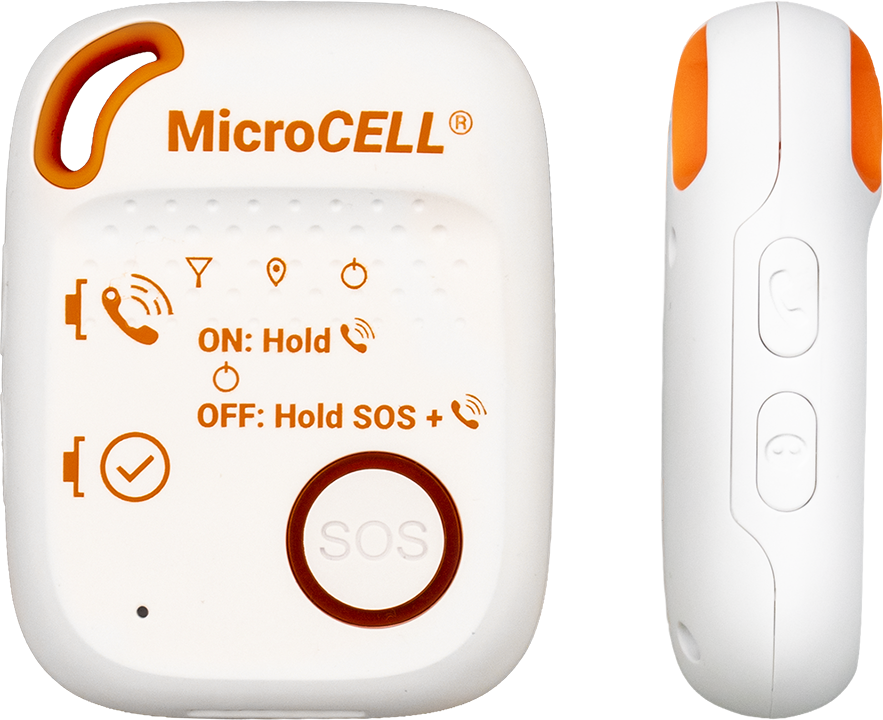
2.44 × 1.87 × 0.71 in.
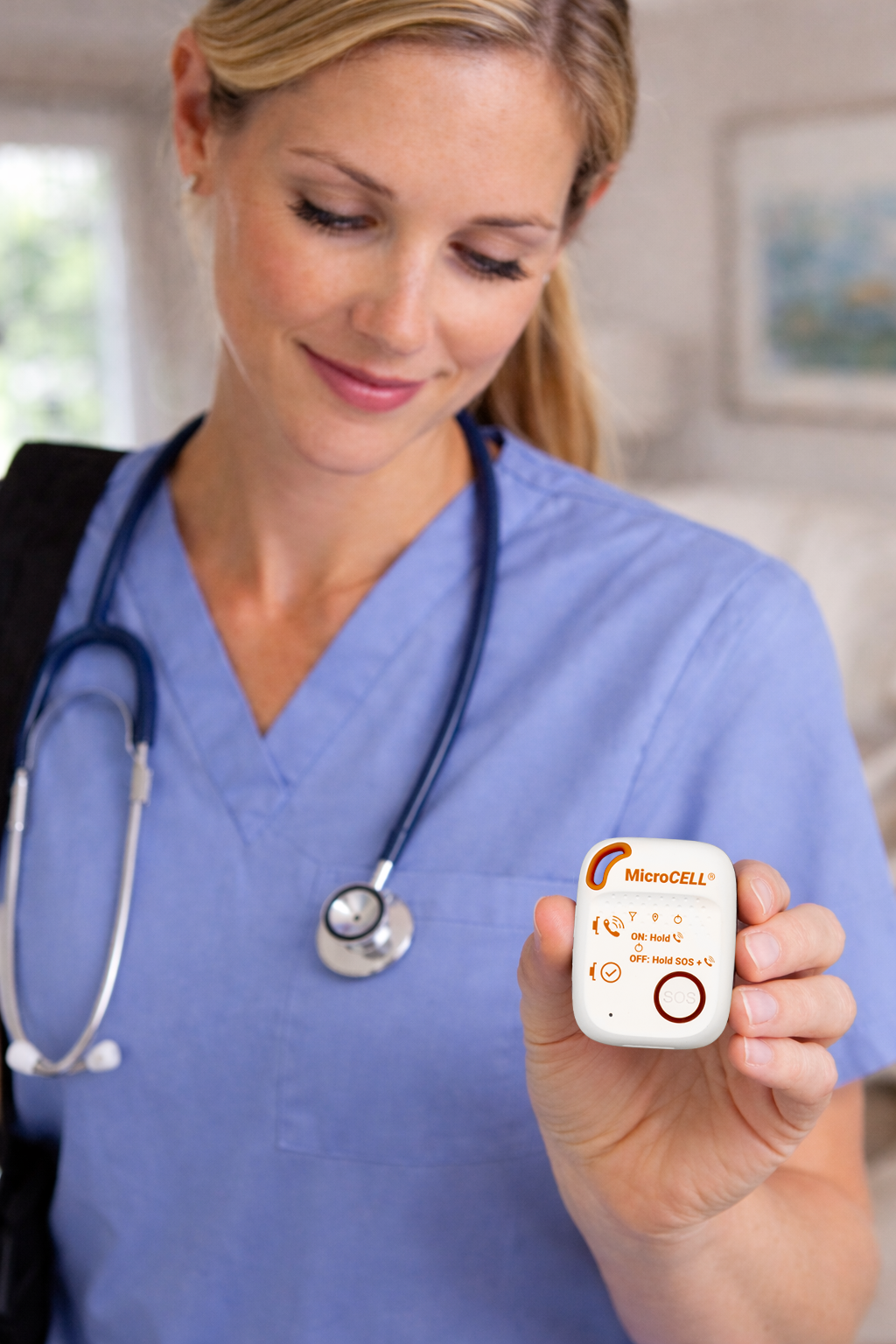
Small enough to disappear inside a closed palm
1.9 ounces
Light enough to wear on a lanyard, waistband clip, or pocket all day
1 button
One dedicated SOS press — no unlocking, no dialing, no screen
0 visible cues
No screen glow and no calling motion for an attacker to see
Grace Industries' MicroCELL® is built for that reality. It attaches on a lanyard under a collar, clips on a waistband, or sits in a jacket or pants pocket, and it can stay there all day without drawing attention. It's discrete, and that is the entire point.
Because MicroCELL® is easily accessible and already on your body, there is nothing to dig for and nothing to unlock. One press of the SOS button sends the call for help. You can trigger it inside a pocket, behind your back, or with the unit completely hidden in your palm — no screen glow, no visible dialing, and unnoticed. An attacker cannot stop a signal they never saw you send. That combination of instant calling, total concealment, and single-button activation is something no smartphone can match, no matter how many emergency shortcuts it claims.
3. Send a silent alarm first — then decide whether to warn the attacker
This is the tactical advantage that changes the entire encounter. With a purpose-built device, you control the sequence, and the first action is silent.
Pressing MicroCELL®'s SOS button instantly routes an alert — complete with your GPS location — to your monitoring team and designated contacts through the Grace Cloud Connect® web portal or monitoring phone app. No sound. No screen light. Your supervisor, safety monitor, family member, or whomever you choose already knows you are in trouble and exactly where you are while the situation is still unfolding. Grace Cloud Connect® escalation protocols can notify multiple people at once. All of it happens without the attacker having any idea that help is already moving.
The choice a phone never gives you
Knowing help is already on the way, you decide whether to create noise that draws attention or deters the aggressor, or to speak directly: "I've already called for help. They know where I am. They're coming." For someone looking for an easy, unseen target, that announcement rewrites the scenario. Many confrontations end once the element of surprise disappears.
A conventional cell-phone call cannot work this way. It is loud from the first ring, it announces itself, and it forces an all-or-nothing decision at the worst possible moment. A discrete alarm lets you start the response silently, then keep control of what happens next.
Protections a phone simply does not have
MicroCELL® carries safeguards for the moments when you cannot act at all. Configurable fall detection and no-motion alarms send an automatic alert if you are knocked down or become incapacitated — no button press required. Scheduled check-ins flag a missed confirmation, so if you're late emerging from a visit, someone knows quickly. MicroCELL® is built for the reality that in an assault, you may not be able to call for help yourself.
Cell phone vs. discrete alarm, side by side
| In an assault | Cell phone | MicroCELL® |
|---|---|---|
| Time to summon help | 10–20 seconds, if the call completes | One button press |
| What it demands | Both hands and your eyes | One thumb, no looking |
| Visible to the attacker | Yes — screen, motion, and speech | No — silent, concealed, no screen |
| Can be taken away | Yes, and it is a first target | The signal is already sent |
| If you are incapacitated | Nothing happens | Fall and no-motion alarms fire automatically |
| Who is notified | One dispatcher at a time | Multiple contacts at once, with GPS location |
4. The statistics are hard to ignore
The risk is not theoretical and it is not rare. For people who work alone with the public, violence has become a regular occupational hazard. Home healthcare and social workers illustrate the problem most clearly, and the trend is climbing.
27%
Of more than 2,000 nurses surveyed by nurse.org in 2026 were physically assaulted at work in 2025 — hit, kicked, pushed, bitten, or grabbed
52%
Faced verbal threats in the same survey
84.8%
Of nurses experienced at least one form of workplace violence in the past year, per a 2025–2026 National Nurses United survey
1 in 4
Considered leaving the profession because of it
Two findings that shape how you prepare
Most violence stays unreported. In the nurse.org survey, only about half of assaulted nurses filed a formal report — many because they believed nothing would change. The real numbers are higher than any published statistic. And the people at greatest risk are frequently alone with the person who threatens them — inside a home, a room, a stairwell, or a parking lot where no coworker can see or hear. That is exactly the scenario in which fumbling for a phone fails and a silent, one-press alarm succeeds.
These numbers are not limited to healthcare. Security officers, home-service and delivery drivers, field technicians, real-estate agents, and hospitality and retail staff who open and close alone all share the same exposure: working by themselves, meeting the public, and serving as their own last line of defense.
The bottom line
In an assault, the outcome is decided in seconds, and awareness and speed decide who walks away. A cell phone costs you both — it takes too long to reach, demands your eyes and both hands, announces your intentions, and is easily taken away. A discrete alarm device does the opposite: it is already in your hand, invisible to the person confronting you, and one silent button press puts help in motion before anyone knows.
For the millions of people who work alone, that difference is not a convenience. It is the difference between calling for help and never getting the chance.
Frequently asked questions
Why is a personal alarm device better than a cell phone in an emergency?
A phone must be retrieved, unlocked, and dialed — ten to twenty seconds of looking down and using both hands, while a would-be attacker can see the action and take the phone away. A dedicated alarm device like MicroCELL® is already in your hand and sends for help with one button press, silently and without any visible screen or dialing.
What makes MicroCELL discrete?
It measures roughly the size of a small stack of cards — 2.44" × 1.87" × 0.71" and 1.9 ounces — so it fits fully inside a closed palm or hides on a lanyard, belt clip, or pocket. There is no bright screen and no obvious "calling" motion, allowing activation without an attacker realizing a signal has been sent.
Can you send a silent alarm without alerting the attacker?
Yes. Pressing MicroCELL®'s SOS button transmits a silent alert with your GPS location. Your monitoring team and contacts receive it through the Grace Cloud Connect® web portal and monitoring phone app. Because help is already on the way, you can then choose whether to trigger a loud alarm or warn the aggressor that assistance has been called.
What if I'm knocked down and can't press the button?
MicroCELL® includes configurable fall detection and no-motion alarms that send an automatic alert if you are incapacitated, plus scheduled check-ins that flag a missed confirmation — so help can still be summoned when you cannot call for it yourself.
Who needs a discrete personal safety device?
Anyone who works alone or meets the public: home-healthcare professionals, nurses, social workers, security officers, utility and field technicians, real-estate agents, delivery drivers, and retail or hospitality staff — including those who open and close alone.
Grace Industries has protected workers in harm's way for over 50 years. To learn more about the MicroCELL® personal safety communications device and the Grace Connected Safety® platform, visit graceindustries.com, call 1-724-962-9231, or email sales@graceindustries.com.
Next step
Put a silent SOS in your team’s hands
Tell us who on your team works alone or meets the public unaccompanied, and we'll walk through what equipping them with MicroCELL® would look like — devices, monitoring, and escalation. No obligation.