
How It Works
Subscription and Non-Subscription Telemetry Systems: Why Both?
Does a lone worker safety system have to carry a recurring fee, and is that fee buying something you actually need? The honest answer has nothing to do with cheap versus capable. Underneath, the technology is the same — what changes is where your alarms have to travel.
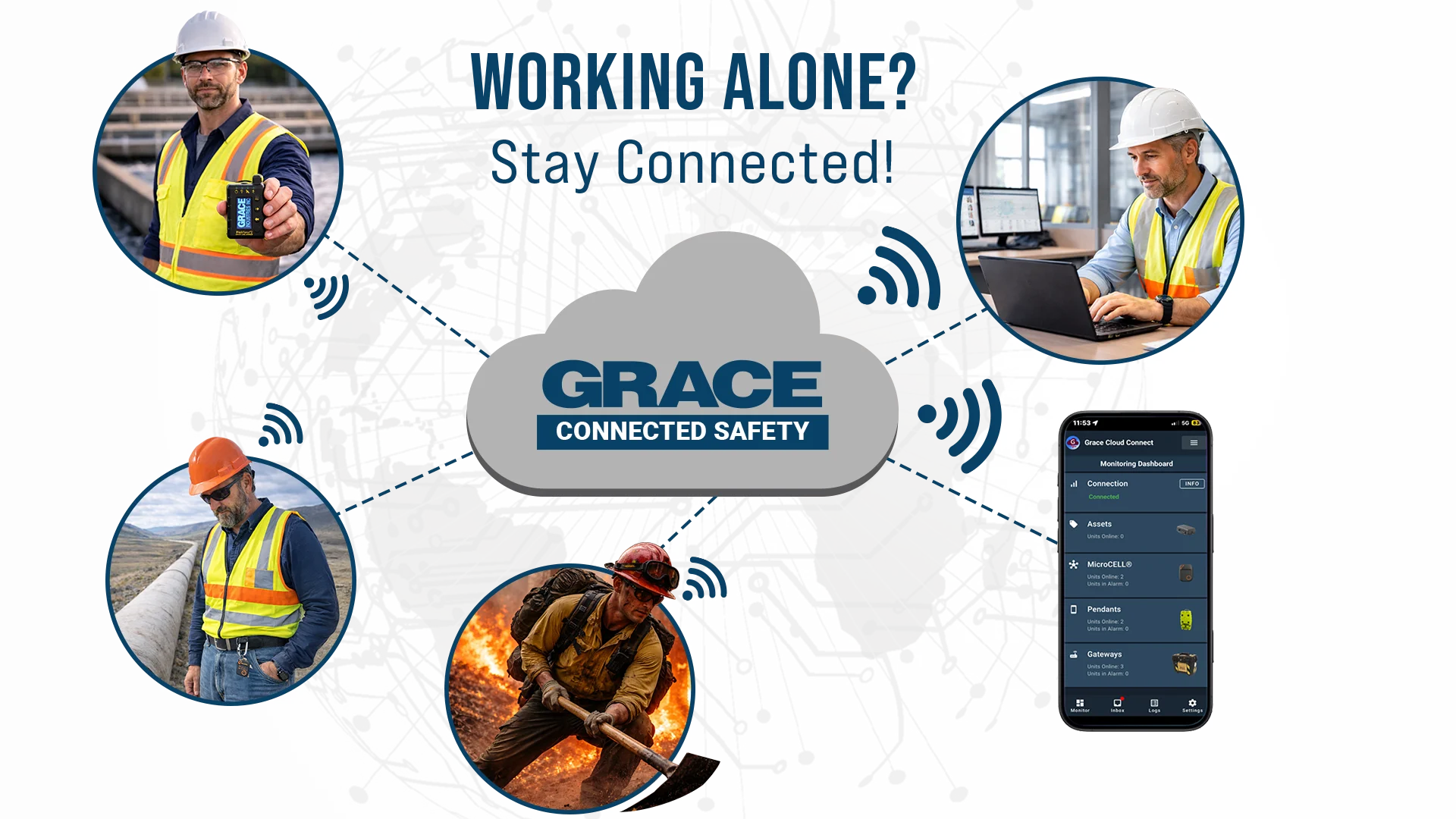
Evaluating a lone worker safety monitoring system almost always starts with the same question: does it carry a recurring subscription fee, and is that ongoing fee buying something I really need? It is a fair question. The answer hinges entirely on where your people work, and where and how you need to receive alerts when something goes wrong.
This is not a choice between a cheap option and a capable one. With Grace Industries, the underlying wireless telemetry safety technology that tracks people and carries their alarms is identical — MicroCELL® excepted — whether a subscription is involved or not. What changes is how and where alarms must reach. It is a matter of choosing the system that fits your application’s requirements.
The technology underneath is the same either way
Before the subscription question can be decided, it helps to understand Grace’s worker-worn devices. The WorkForce®, SuperCELL®, and TPASS® pendants signal and communicate over a secure RF network. Grace’s proprietary message protocol incorporates redundant signaling across many channels, which mitigates interference and improves performance in noisy, congested commercial and industrial environments.
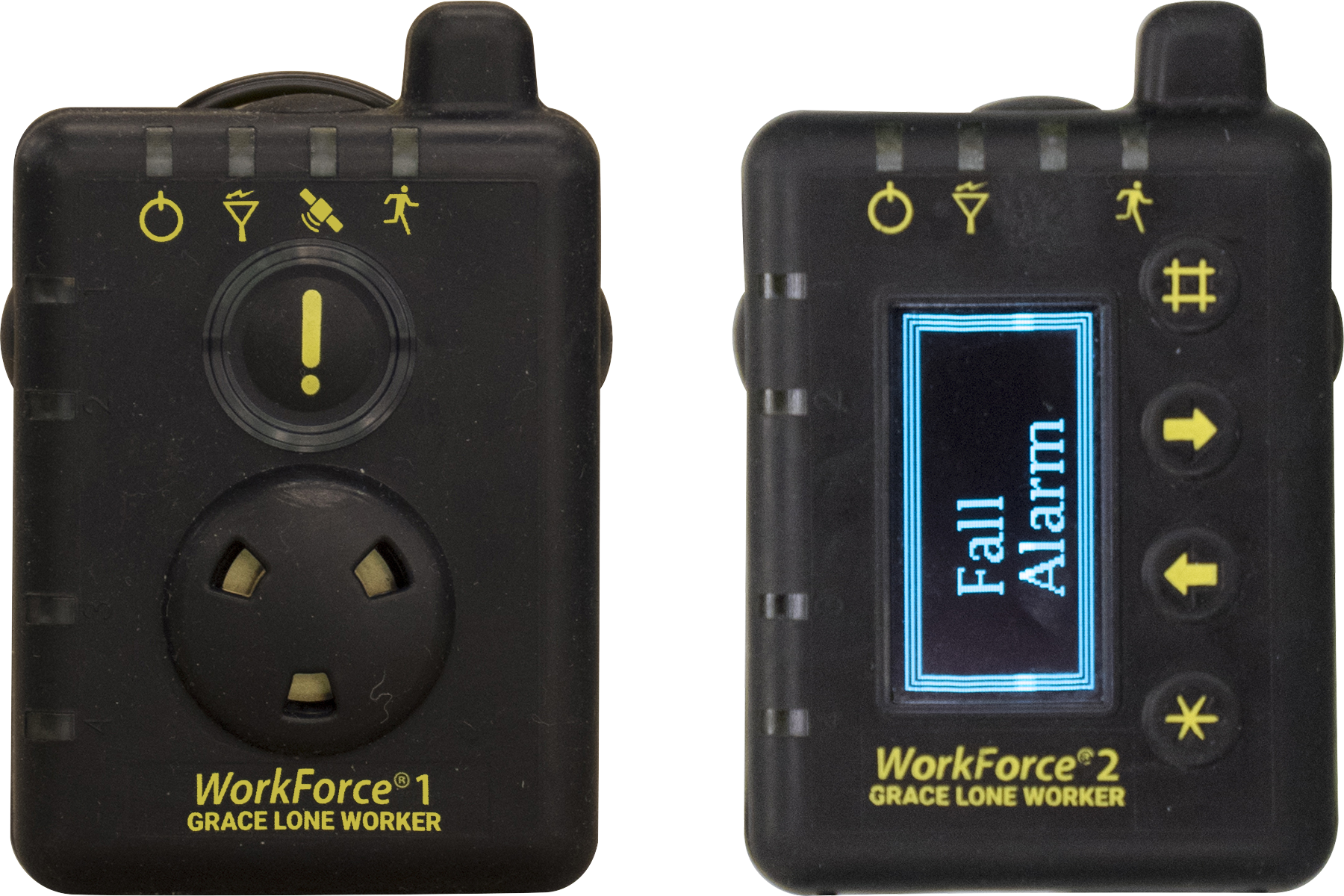
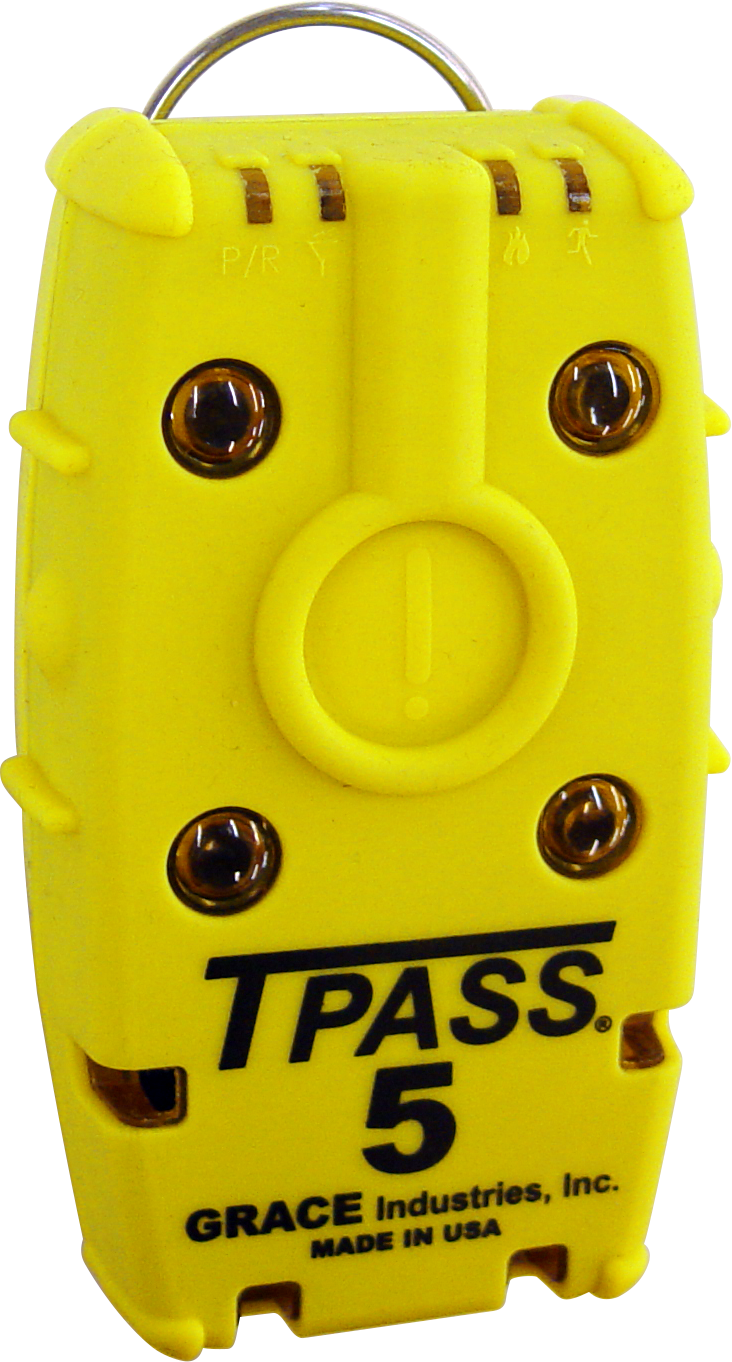
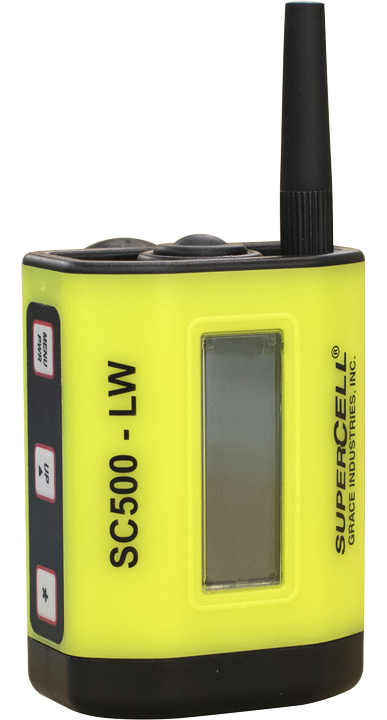
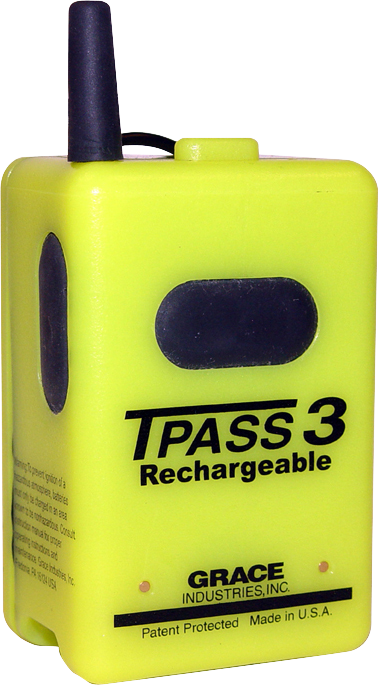
On this RF platform, operating distance reaches up to one mile line-of-sight. Typical indoor coverage is approximately 200,000 square feet, depending on building construction, contents, and operating environment. Where operating distance becomes limited, Grace repeaters are available to extend RF coverage throughout a structure.
Secure RF Network
902-928 MHz License-free ISM band, using frequency-hopping spread-spectrum transmission
1 mile
Operating distance, line-of-sight
~200,000 sq ft
Typical indoor coverage, depending on construction, contents, and environment
0 licenses
No FCC licensing required, and repeaters extend coverage where a structure limits it
Where does the subscription actually come from?
Grace’s telemetry pendants communicate in three ways: pendant-to-pendant, pendant-to-base, and pendant-to-internet by way of a Grace gateway. Of those three configurations, only one requires a subscription. MicroCELL® follows a fourth path of its own, covered further below.
Pendant to pendant
Workers watch over each other directly, device to device. No subscription.
Pendant to base
Alarms land at a monitoring base on the premises. No subscription.
Pendant to internet
A gateway carries alarms to the cloud. This is the one that carries a fee.
The short answer
The internet connectivity is the subscription. It covers access to the cloud monitoring and alerting platform, Grace Cloud Connect®, along with the cellular or satellite connection, if equipped. That is why a gateway-based, cloud-connected system carries a recurring fee.
Pendant-to-gateway: the connected path
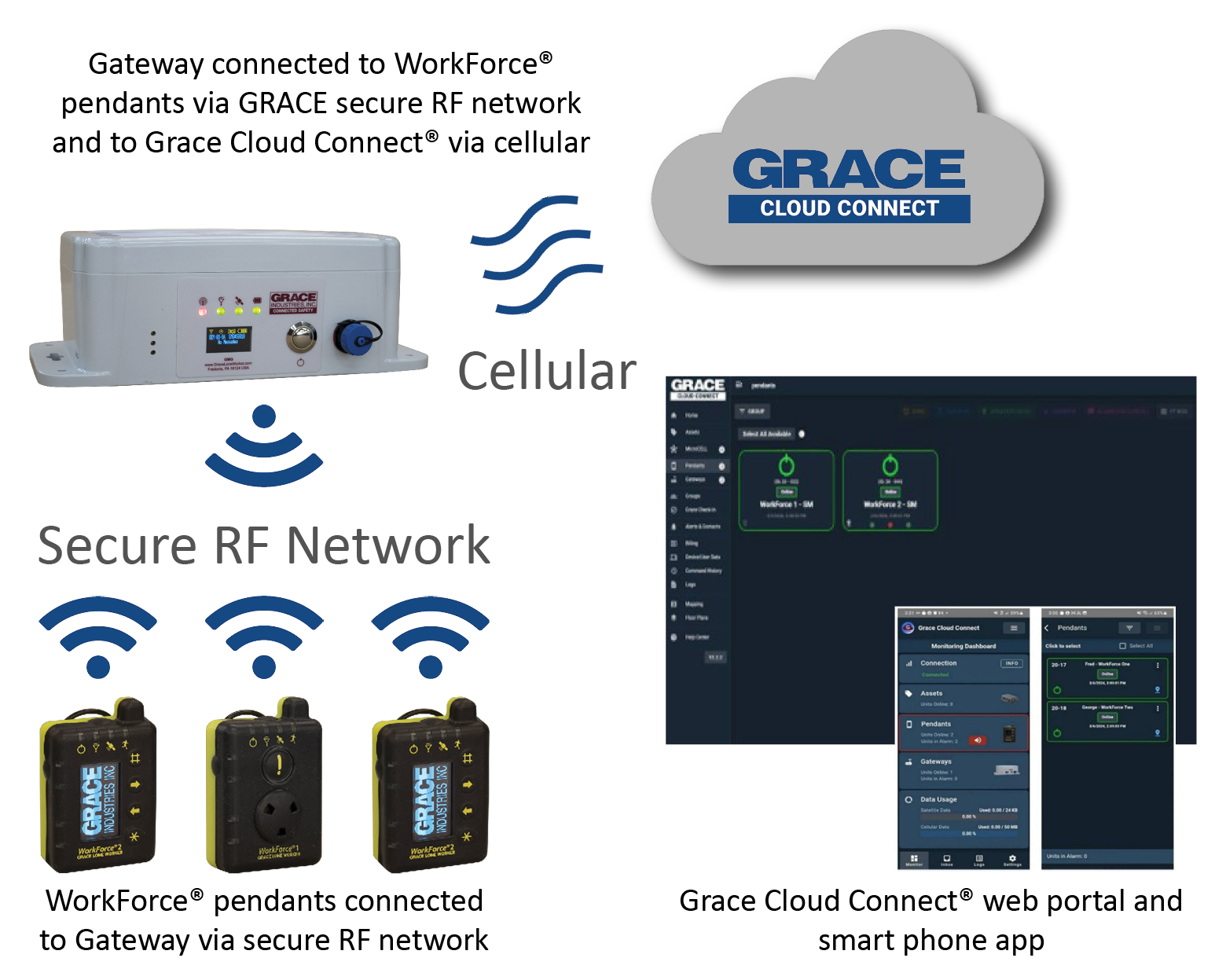
Internet-connected systems using gateways communicate on two different RF platforms at once: Grace’s secure RF network for talking to the worker-worn pendants described above, and cellular or Ethernet — with an optional satellite link — to reach the internet.
That connection pushes alerts and worker status up to Grace Cloud Connect®, the cloud platform where you monitor people, receive alerts, and review logged history from a browser or smartphone. From the next room, the next state, or virtually anywhere internet or cellular connectivity is available, worldwide.
MicroCELL®: straight to the cloud, with no gateway
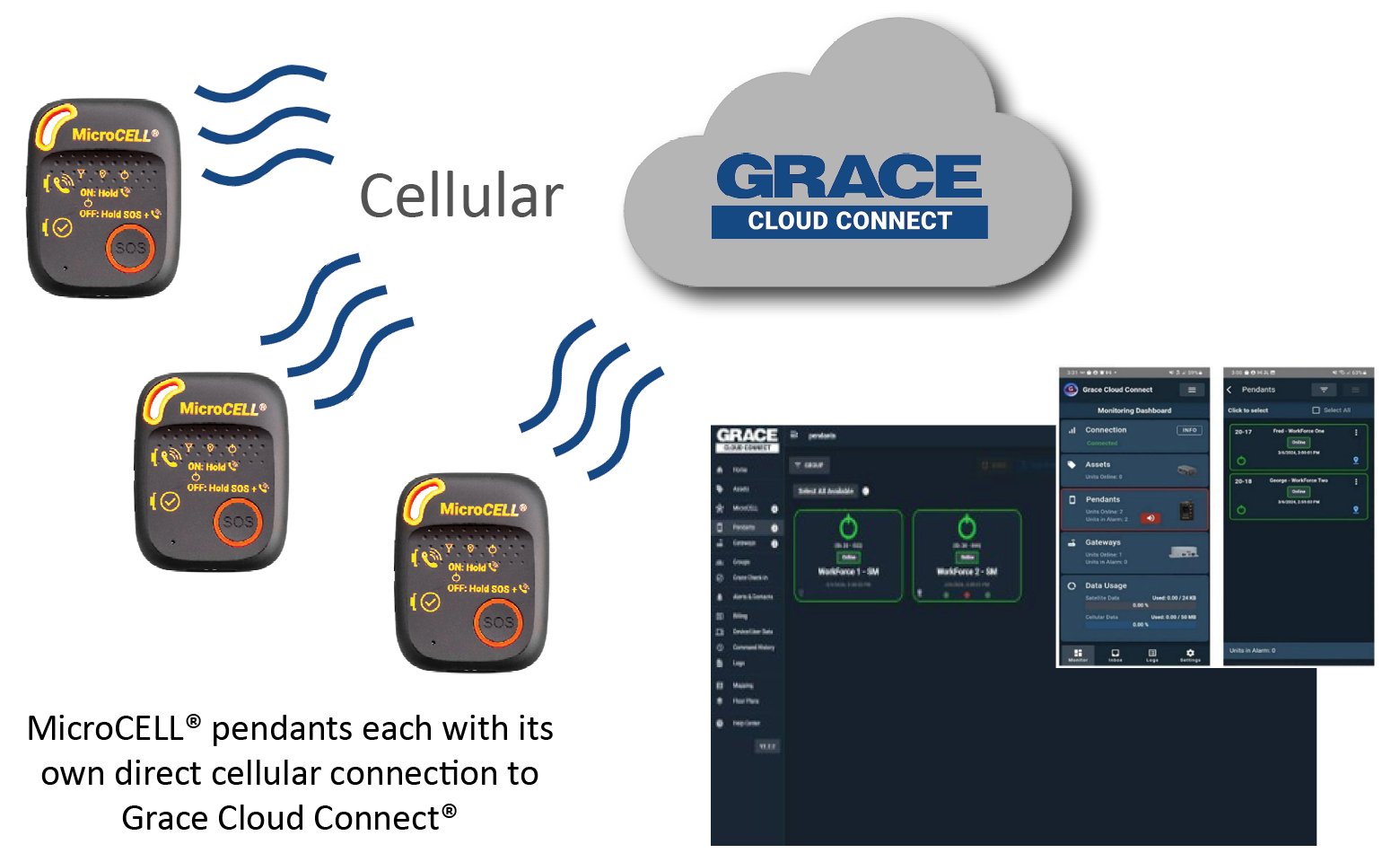
MicroCELL® is the exception above. Instead of reaching the internet through a gateway, each MicroCELL® pendant carries its own cellular connection and reports directly to Grace Cloud Connect®. It does not operate on the same RF network as the other Grace telemetery pendants. There is no gateway to install and no monitoring base to sit beside it — the device is the entire link.
That makes it the right fit where there is no fixed site to build around: people who cover different ground every day, move between locations, or work alone far from any installed infrastructure. And because each device reaches the internet on its own, MicroCELL® carries a subscription for exactly the same reason a gateway does — the internet connectivity is what the fee covers.
The hybrid approach
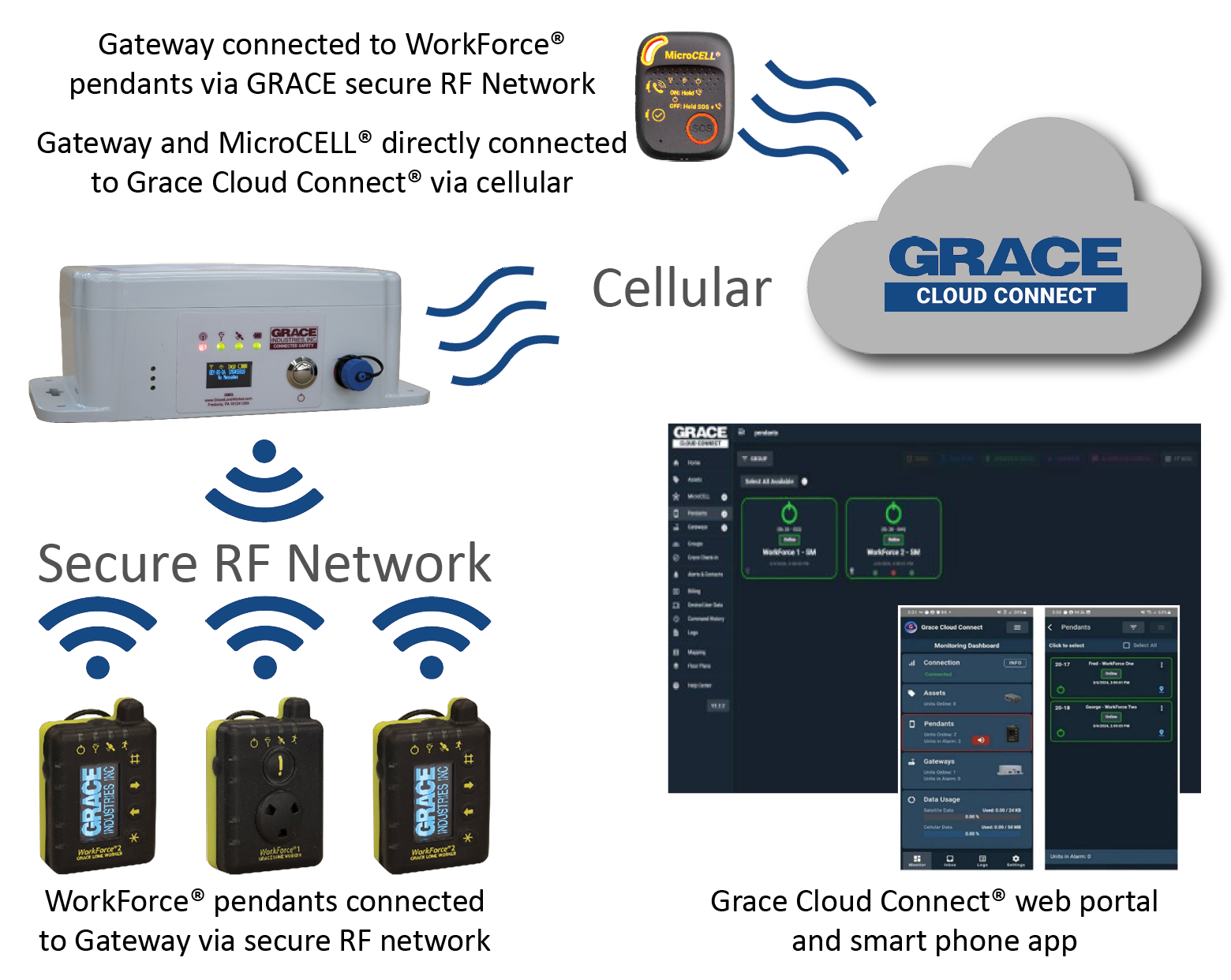
These approaches are not mutually exclusive. Many operations run both: on-site monitoring for the staffed facility using Grace telemetry pendants with a cloud-connected gateway plus MicroCELL pendants for people who roam beyond it. Likewise, certain Grace monitoring bases have built in gateways to accomplish the same
Pendant-to-monitoring base: the non-subscription path
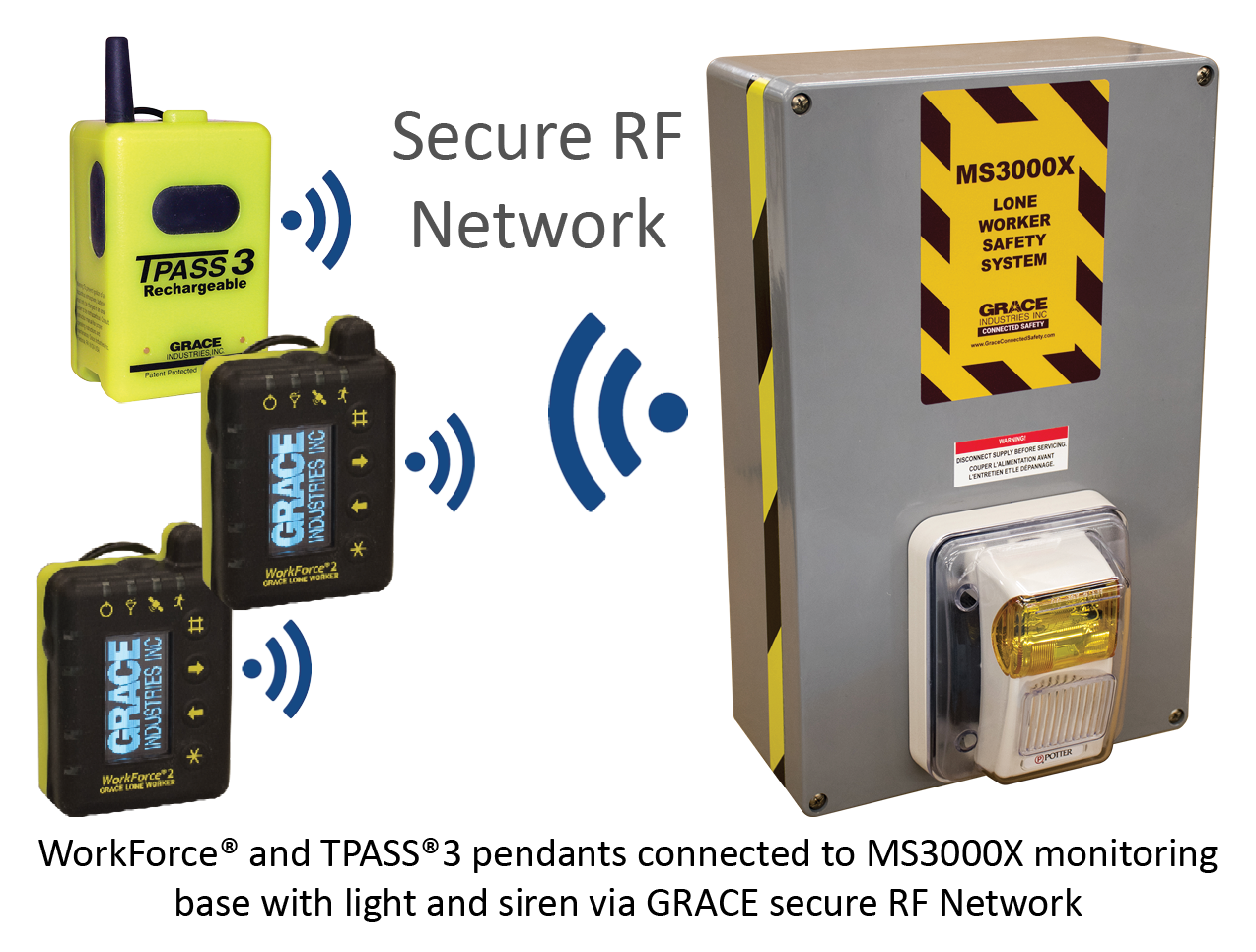
Not every operation needs to monitor its people from anywhere on the planet. Many simply require reliable alerting on the premises — someone at a desk, a control room, or a guard station who must know immediately when a worker signals for help.
For those sites, Grace offers monitoring bases that carry no cellular interface and no internet connection at all. The base uses the same secure RF network described earlier, and receives worker-worn pendant alarms exactly as a gateway does. What differs is what happens next: the base drives locally or network-installed monitoring software (Grace-Watch®) , an installed light and siren, or outputs to user alerting devices — an existing SCADA system or alarm panel, for example — that notify others of a worker emergency. Because the monitoring base never touches the internet, there is no subscription.
Pendant-to-pendant: workers watching each other
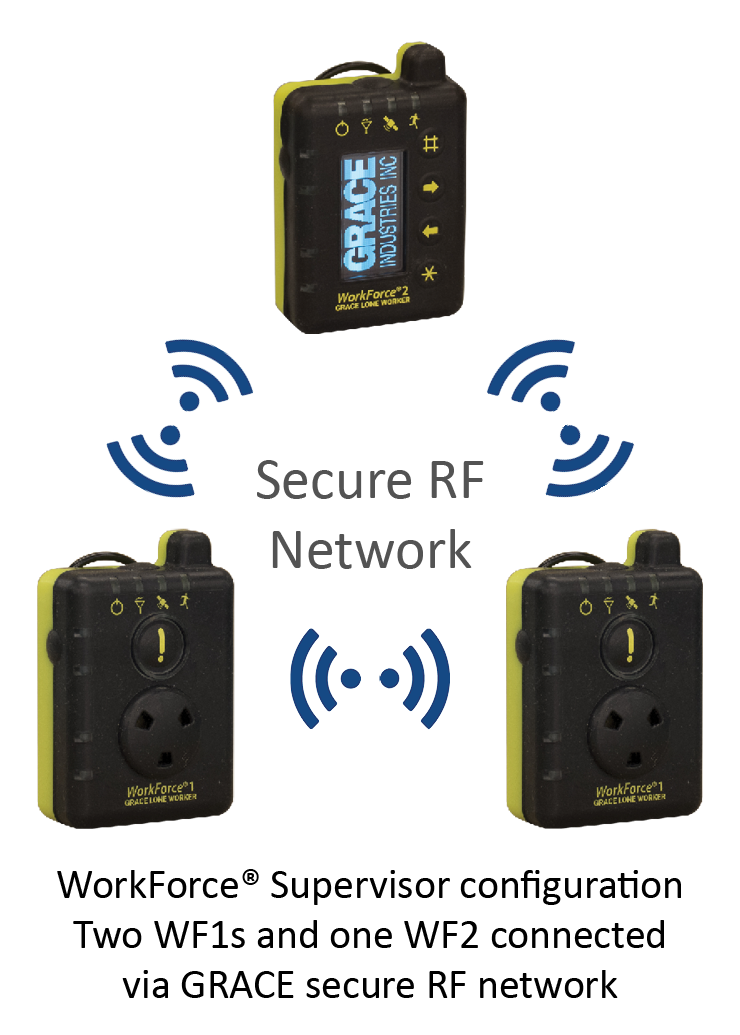
Pendant to pendant is just that, no gateway, no monitoring base, and no subscription. Grace telemetry pendants not only communicate with gateways and monitoring bases, but also with each other so that workers and/or a supervisor, each with their own pendant, can send and receive alerts to and from other pendants using the same secure RF network used by all Grace telemetry equipment (MicroCELL excluded). This pendant-to-pendant connectivity also holds true for pendant-to-gateway and pendant-to-monitoring base configurations.
A standard pendant-to-pendant system is Grace’s "Buddy" package which utilizes two WorkForce®, TPASS, or SC500 pendants. This system allows two workers to monitor one another’s safety by providing instant alerts for falls, panic triggers, or no-motion events. "Supervisor" and "Crew" configurations offer the same monitoring as the "Buddy" package, with the added advantage of identity-specific alerts. A typical "Supervisor" setup includes at least three pendants. For larger teams, the system scales into a "Crew" configuration by adding additional pendants. In this configuration, every worker with a pendant with a display (WorkForce® WF2 or SC500) can view the identity and location of a colleague in distress. Additionally, WF2 and SC500 pendants are capable of broadcasting a critical evacuation signal to all pendants in the system simultaneously.
Side by side
| Gateway & cloud | On-site monitoring base | |
|---|---|---|
| Link to the outside | Cellular or Ethernet, optional satellite | None — the system stays on the premises |
| Where alarms land | Grace Cloud Connect®, in a browser or on a phone | Local software, an installed light and siren, or user alerting devices |
| Monitor from | Anywhere with connectivity, worldwide | A desk, control room, or guard station on site |
| Logged history in the cloud | Yes | Kept locally instead |
| Recurring subscription | Yes — for the internet connectivity | No |
So, which one best fits your Worker-Safety needs?
The decision boils down to a single question: does the person who must respond need to be off-site, or will they always be on-site?
Off-Site: A subscription, cloud-connected system with a connected gateway or MicroCELL® fits when you need any of the following: alerts that reach a supervisor’s phone no matter where they are; visibility across multiple sites from one dashboard; or cloud-based logging and reporting for compliance and incident review. And if your workers are at remote or scattered locations far from any fixed monitoring station, MicroCELL® is the pendant to consider.
On-Site: A non-subscription pendant-to-pendant or pendant-to-monitoring base system fits when monitoring happens on the premises. Person to person; a staffed control room, front desk, or guard post; a facility where sirens and strobes deliver the fastest attention; a single-building or campus operation where a PC or networked monitoring station covers everyone; or any site that prefers to avoid a recurring fee and keep the entire system on its own local network. This solution still provides the full strength of the Grace system—you simply monitor locally.
The bottom line:
A subscription based safety telemetry system is not a premium for “better safety.” The life-safety solution is there either way. The subscription buys monitoring reach: the cellular-and-cloud path that lets you monitor people from anywhere there is an internet connection, receive alerts on a phone, and keep documented records in the cloud. When that reach matches how your operation actually works, the cost is justified. When workers and monitoring lives on-site, a non-subscription based system delivers the same rugged telemetry and safety-monitoring with no recurring fee. Choose the configuration that places the alert in front of the person who can respond—as fast as possible.
Grace Industries has protected those who work in harm’s way for over 50 years. To learn more about the WorkForce®, SuperCELL®, and TPASS® safety devices, Grace gateways and monitoring bases, and the Grace Connected Safety® platform, visit graceindustries.com, call 1-724-962-9231, or email sales@graceindustries.com.
Next step
Not sure whether you need the subscription?
Tell us where your people work and who needs to see the alarms, and we'll walk through whether a cloud-connected gateway or an on-site monitoring base is the right fit. No obligation.