
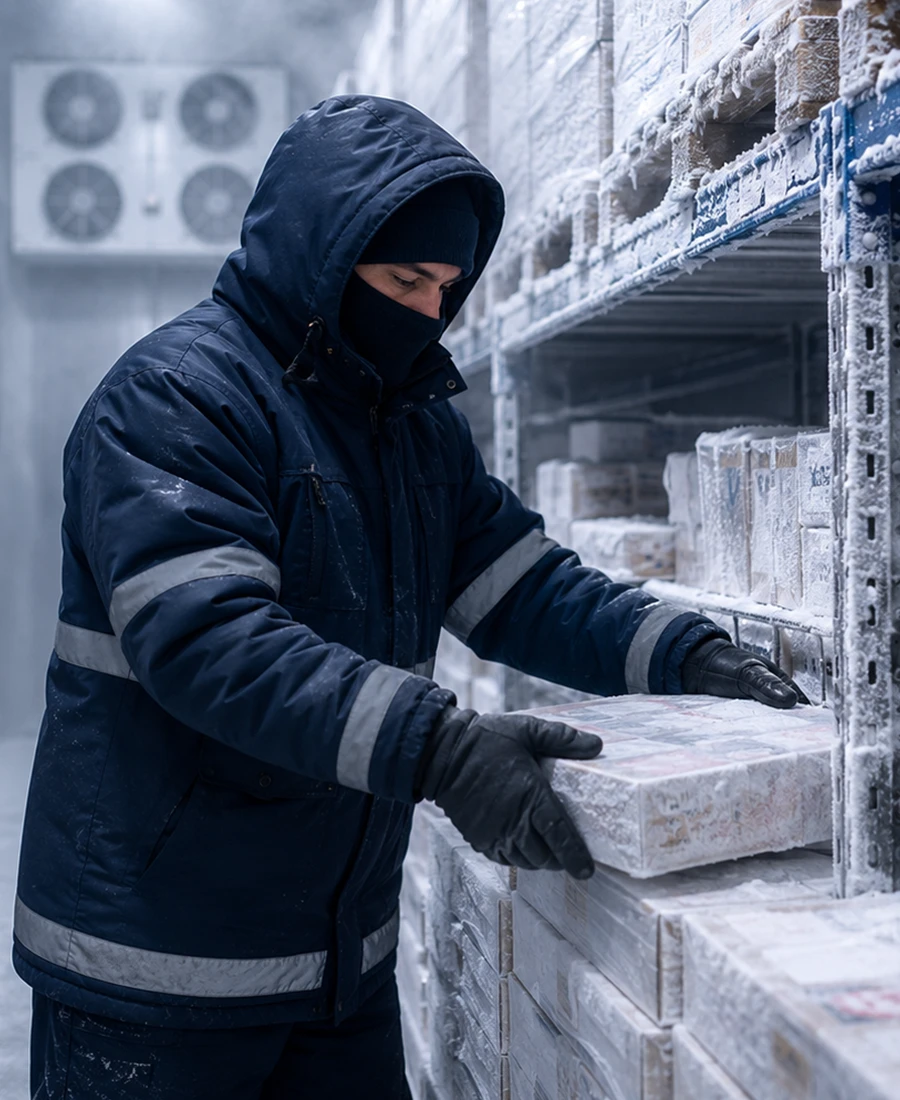

Lone worker safety systems built for cold storage and food processing operations.
Cold storage and food processing facilities present unique hazards such as sub-zero temperatures, slippery surfaces, loud machinery, ammonia refrigeration systems, and workers who regularly enter freezers or isolated areas out of sight of coworkers.
Grace Industries systems help improve response and visibility with wearable safety devices, man-down alerting, panic activation, local monitoring bases, and connected notification options. Whether your team is inside a freezer vault, on a production line, or performing maintenance in a mechanical room, Grace helps make sure incidents do not go unnoticed. OSHA notes that anyone working in a cold environment may be at risk of cold stress, while NIOSH identifies hypothermia, frostbite, trench foot, and chilblains as cold-related illnesses. View OSHA cold stress guidance or NIOSH cold stress guidance.
Where your teams work, and where safety matters most.
Cold storage and food processing workers move between freezer vaults, production floors, loading areas, and maintenance spaces. Grace safety systems help protect workers in each of these environments.
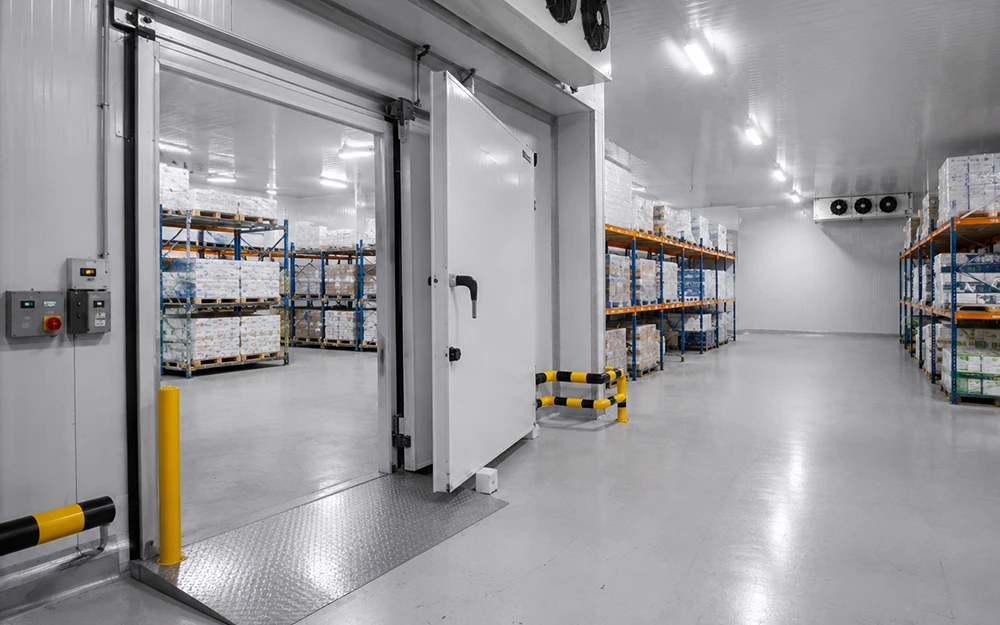
Freezer & Cold Storage Vaults
Safety coverage for workers entering freezer vaults, blast chillers, walk-in freezers, and cold rooms where exposure and delayed response can create serious risk.
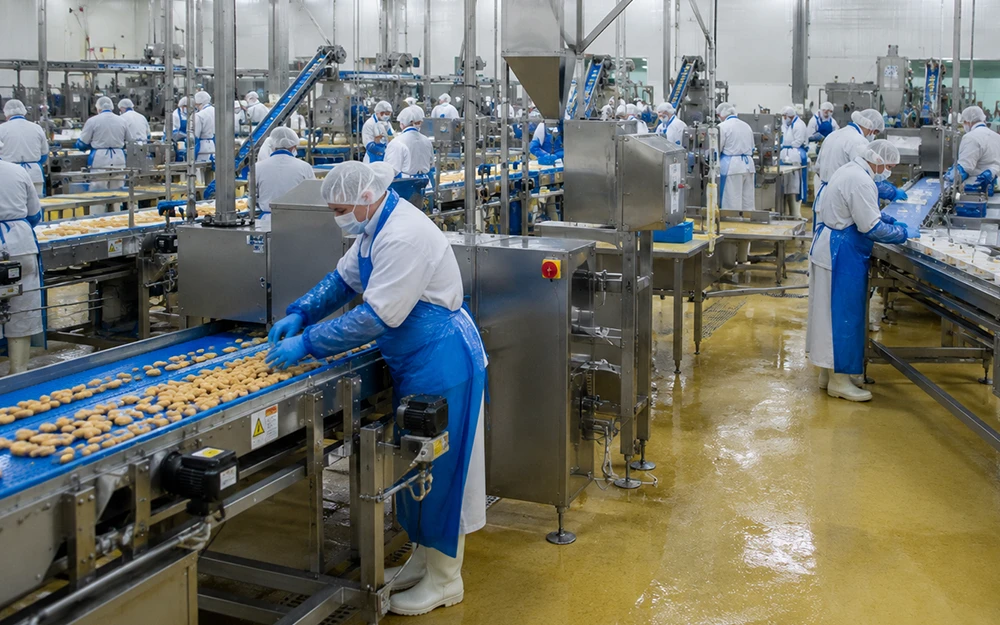
Processing Floor & Maintenance Areas
Protection for workers on production lines, in equipment rooms, around refrigeration systems, and during maintenance work where noise and isolation can delay response.
Build the right safety system for your team.
Start with the wearable device your worker carries, then choose how alerts should be received locally at the facility, remotely by supervisors, or through a connected monitoring workflow.
Protect the worker entering the freezer.
Wearable safety devices give workers a way to send emergency alerts and support man-down or no-motion detection when they are alone or working in hazardous cold environments.
- Wearable safety pendants for lone workers
- Man-down and no-motion detection
- Panic button for emergency alerts
- Useful for freezer entry, cold rooms, and production areas
Choose how alerts are received.
Route alerts to the right people or equipment with local monitoring bases, light and siren options, phone dialers, text alerts, app notifications, or connected monitoring.
- Local alerting with base stations, lights, and sirens
- Supervisor notification options
- Escalation workflows to help ensure alerts are not missed
- Flexible coverage for both production floors and freezer areas
A simple safety setup for freezer entry and cold storage work.
For many cold storage and food processing facilities, the system starts with a WorkForce pendant worn by the worker and an MS2000 monitoring base used as the local alert point.
WorkForce Pendants
WorkForce pendants give workers a wearable way to call for help when they enter freezers, cold rooms, production areas, mechanical rooms, or other isolated spaces.
- Panic button activation for emergency alerts
- Man-down and no-motion alerting options
- Useful for lone workers entering freezer areas
- Supports cold storage and food processing safety programs
MS2000 Monitoring Base
The MS2000 gives your facility a local monitoring point for worker safety alerts, helping supervisors or safety teams respond when a worker needs help.
- Local alerting for worker-worn safety devices
- Helpful for freezer vaults, production floors, and maintenance areas
- Supports on-site response workflows
- Can be part of a larger facility-wide safety setup
Cold storage safety resources worth reviewing.
Cold storage and freezer work can involve cold stress, slips and falls, reduced dexterity, entrapment risk, and delayed emergency response. These outside resources can help safety managers better understand the hazards and prevention strategies.
Cold stress prevention
OSHA and NIOSH provide guidance on recognizing cold stress hazards, training workers, monitoring symptoms, and protecting employees exposed to cold environments.
- Cold stress can affect workers in freezers and refrigerated spaces
- Cold exposure can contribute to hypothermia, frostbite, and other illness
- Training, protective clothing, monitoring, and emergency response planning are important
Cold environments and worker performance
CCOHS explains that cold work can reduce mental alertness, finger sensitivity, dexterity, muscle strength, and joint movement, which can increase incident risk.
- Cold can reduce mental alertness and work efficiency
- Manual tasks may be impaired as finger sensitivity and dexterity decrease
- Lower temperatures can affect strength and movement
Quick answers
Common questions from cold storage and food processing safety managers.
How do Grace systems help workers inside freezers?
What is the role of the WorkForce pendant?
What is the role of the MS2000?
Where are these systems used in food processing facilities?
Can Grace help recommend the right setup for our facility?
Do these systems replace facility safety procedures?
Need help choosing the right worker safety setup?
Whether you need local alerting on the production floor, man-down coverage inside freezer vaults, or connected monitoring with text and push notifications, Grace can help match the right system to your facility and crew workflow.