Regulation & Compliance
Working Alone Requirements in Canada: What Each Province Requires
Canada regulates working alone province by province, and the requirements range from a single sentence to a prescribed written check-in procedure with documented results. A jurisdiction-by-jurisdiction guide for multi-province employers.

If you operate across Canadian provinces, working-alone compliance is not one obligation. It is thirteen — and this guide covers the ten with published provisions verifiable from primary sources.
Occupational health and safety is provincial jurisdiction in Canada, and the spread is genuinely wide. British Columbia and Newfoundland and Labrador prescribe written procedures with specified check intervals, a designated person to make contact, and documented results of every check. Alberta covers the same ground in two sentences. Ontario has no working-alone regulation at all. Here’s what each one requires.
Prescriptive jurisdictions
British Columbia and Newfoundland and Labrador have the most detailed regimes in the country, and they are near mirrors of each other. If you build a program that satisfies BC, it will very likely satisfy every other Canadian jurisdiction.
British Columbia
OHS Regulation Part 4, sections 4.20.1 through 4.23.
- 4.20.1 — Definition. To “work alone or in isolation” means assistance would not be readily available in case of emergency, injury or illness.
- 4.20.2 — Hazard identification. Before assigning isolated work, identify the hazards; eliminate the risk, or where that isn’t practical, minimize it through engineering controls, administrative controls, or both.
-
4.21 — Written procedures for checking well-being. This is the core, and it is
genuinely prescriptive. The procedure must specify:
- time intervals between checks
- protocol if the worker cannot be contacted, including emergency rescue
- designated person to establish contact at predetermined intervals
- documented results of each check
- mandatory check at the end of the shift
- and it must be developed in consultation with the joint committee or health and safety representative and the worker
- 4.22 — Training. Both the isolated worker and the assigned monitor must be trained on the written procedure.
- 4.22.1 — Late-night retail. For gas stations and convenience stores operating between 11 p.m. and 6 a.m. with a risk of violence: written money-handling procedures plus one of (a) physical separation by a locked door or barrier, (b) additional workers assigned, or (c) a violence prevention program including a time-lock safe, limited accessible cash and lottery tickets, visibility into and out of the premises, video surveillance, signage, workers aged 19+ equipped with monitored personal emergency transmitters, and an independent security audit every two years.
- 4.23 — Review. At least annually, or sooner if the work environment changes or the procedures prove ineffective.
BC 4.22.1 is one of only two provisions in Canada that names a personal emergency transmitter as a compliance element by name.
Newfoundland and Labrador
Occupational Health and Safety Regulations, 2012 (NLR 5/12), section 15 — structurally almost identical to BC.
Working alone or in isolation is defined by assistance not being readily available. A risk assessment is required before assigning such work, with controls to eliminate or minimize identified hazards, and a written procedure for checking the worker’s well-being. That procedure must include check intervals and emergency response protocols where contact can’t be established; a designated person must establish contact at predetermined intervals with results recorded; it must be developed in consultation with the worker and the OHS committee or representative; and it must be reviewed annually or sooner if arrangements change or procedures prove ineffective.
Duty-based jurisdictions
These provinces set the obligation and leave the method to your assessment of the hazard. Less prescriptive is not less demanding — it shifts the burden of justifying your choices onto you.
Alberta
OHS Code Part 28, sections 393–394. The entire requirement, verbatim:
- 393. “This Part applies to working at a work site where a worker works alone.”
- 394. “An employer must establish and implement procedures to ensure the health and safety of a worker who works alone, including procedures for regular communication with the worker and for rescue in case of an emergency.”
Two elements, no prescribed interval, no written-procedure mandate. But note that both elements are mandatory: regular communication and a rescue plan. An employer with a check-in schedule but no answer to “what do we do when they don’t answer” has not met s. 394.
Saskatchewan
Occupational Health and Safety Regulations, 2020, section 3-24.
Working alone means being the only worker of the employer or contractor at that worksite where assistance is not readily available. The employer must identify risks in consultation with the committee, representative or workers; take all reasonably practicable steps to eliminate or reduce them; and provide effective communication — 3-24(4)(a) specifies radio, telephone or cellular phone, “or any other means that provides effective communication in view of the risks involved.” Additional measures may include regular employer contact, activity restrictions, competency standards, PPE, safe work procedures and emergency supplies for extreme weather.
Section 3-27(6) adds late-night retail requirements for a worker alone between 11 p.m. and 6 a.m., including check-in procedures and personal emergency transmitters — the second of the two Canadian provisions naming the device type.
Manitoba
Workplace Safety and Health Regulation, M.R. 217/2006, Part 9.
Applies to every workplace where employees work alone or in isolation. The employer must identify risks in consultation with the committee, representative or workers and take steps to eliminate or reduce them, and must establish safe work procedures that include an effective communication system — radio, telephone or cellular — and a system of regular contact by the employer with the worker, or other control methods.
Two Manitoba-specific obligations that are easy to miss: safe work procedures must be posted conspicuously, and they must be reviewed at least every three years or whenever circumstances change.
New Brunswick
N. B. Reg. 92-133, Code of Practice for Working Alone Regulation.
Triggered when an employee is the employer’s only employee at the workplace and works in circumstances where help is not readily available in the event of injury, ill health or emergency.
The distinguishing feature is the deliverable: the employer must develop a written code of practice containing the workplace details and contact information, the nature of the business and identified risks, risk-minimization procedures, communication methods, and emergency response procedures — then provide the materials and equipment the code specifies, train employees and supervisors, ensure compliance, and periodically review and revise.
The regulation names hazardous work situations to identify confined spaces, chainsaw operation, diving and drowning risks. No check-in interval is prescribed — the employer sets frequency in the code based on its own hazard assessment.
Quebec
Regulation respecting occupational health and safety (RSST), S-2.1, r. 13, section 322. In force since September 1, 2012. The full text:
“Lorsqu’un travailleur exécute seul un travail dans un lieu isolé où il lui est impossible de demander de l’assistance, une méthode de surveillance efficace, intermittente ou continue, doit être mise en application.”
In translation: where a worker works alone in an isolated place where it is impossible to request assistance, an effective monitoring method — intermittent or continuous — must be implemented.
No prescribed intervals, no written procedure mandate comparable to BC. But the phrase “méthode de surveillance efficace” — an effective monitoring method — puts the burden on the employer to show that whatever it implemented actually works. CNESST and sector associations such as APSAM publish guidance on meeting it.
Northwest Territories and Nunavut
Occupational Health and Safety Regulations, Part 3, section 33, shared between the two territories and administered by the WSCC.
Applies where a worker is required or permitted to work alone or at an isolated work site. The employer must identify hazards in consultation with the joint committee, worker representative or workers; take reasonable measures to eliminate or reduce the risks; and establish an effective communication system — radio, telephone or cellular, or any other means that provides effective communication considering the risks involved.
Check-in frequency is set by the level of risk identified in the hazard assessment rather than prescribed in the regulation. The WSCC code of practice recommends defining time intervals, a shift-end check-in, and a protocol for when contact cannot be established.
General-duty jurisdictions
Ontario — no working-alone regulation, and that surprises people
Ontario has no dedicated working alone regulation. The obligation arises from two places:
OHSA s. 25(2)(h) — the general duty to “take every precaution reasonable in the circumstances for the protection of a worker.”
OHSA Part III.0.1, added by Bill 168 (in force June 15, 2010), which is where the practical requirement lives:
- s. 32.0.1 — written workplace violence and harassment policies, reviewed annually
- s. 32.0.2(2)(b) — the program must “include measures and procedures for summoning immediate assistance when workplace violence occurs or is likely to occur.”
- s. 32.0.3 — risk assessment considering circumstances common to similar workplaces and specific to this workplace, with results communicated to the JHSC or workers
- s. 32.0.4 — domestic violence: where the employer is aware, or ought reasonably to be aware, that domestic violence may expose a worker to physical injury in the workplace, take every precaution reasonable in the circumstances
Section 32.0.2(2)(b) is the operative provision for a lone worker in Ontario. “Measures and procedures for summoning immediate assistance” is a functional requirement, and for a worker alone in a client’s home, a warehouse at night, or a remote site, it is difficult to satisfy with a policy document alone.
Nova Scotia
Nova Scotia also has no dedicated working-alone regulation. The obligations come from:
- OHS Act s. 13(1)(a) — take every precaution reasonable in the circumstances to ensure the health and safety of persons at the workplace
- OHS Act s. 28(2)(e) — larger employers must maintain a written OHS program with hazard identification, inspection and reporting systems, which must address lone work
- Violence in the Workplace Regulations — require certain sectors including retail, healthcare and financial services to conduct violence risk assessments and develop prevention plans
- First Aid Regulations s. 5(1) — a practical and often-overlooked one: full-time employees who regularly work alone must hold emergency first aid certification, or the employer must ensure assistance can be summoned within a reasonable length of time
What a compliant program looks like across all of them
Read the jurisdictions together and the same five elements appear almost everywhere, in varying levels of prescription:
- A hazard assessment, done in consultation with the joint committee, safety representative or the workers themselves — this consultation requirement appears in BC, Saskatchewan, Manitoba, NL, NT/NU and Ontario
- Effective communication — most jurisdictions name radio, telephone or cellular, and most add “or any other means that provides effective communication in view of the risks involved,” which is deliberately technology-neutral
- A check-in system with defined intervals, a designated person responsible, and — in BC and NL — documented results
- A defined response when contact fails, up to and including rescue. Alberta makes this explicit in two sentences; BC and NL prescribe it in detail. This is the element most programs are weakest on.
- Training, review and documentation — annually in BC and NL, every three years in Manitoba, and periodically elsewhere
Practical advice for a multi-province employer: build to the BC standard and document it. Written procedures with specified intervals, a named monitor, recorded check results, a mandatory end-of-shift check, a written escalation and rescue protocol, and an annual review will satisfy the prescriptive jurisdictions and will comfortably clear the duty-based ones.
And note what the technology-neutral language actually asks of you. “Any other means that provides effective communication in view of the risks involved” is not permission to do less — it is an invitation to justify what you chose. A cellular phone in a basement, a freezer, or a remote valley is not effective communication, and a hazard assessment that concludes otherwise won’t survive an inspection after an incident.
The requirement most programs fail on paper: documented results
Two jurisdictions do not just require check-ins. They require records of them.
BC 4.21 requires the written procedure to include documented results of each check. Newfoundland and Labrador 15(6) requires that a designated person establish contact at predetermined intervals with results recorded.
Read that carefully, because it is a bigger obligation than it looks. It is not enough to have a check-in schedule and a person assigned to it. You have to be able to produce, after the fact, a record showing that each check actually happened — who checked, when, and what the outcome was.
A manual system satisfies this badly. A supervisor phoning three isolated workers every two hours and ticking a clipboard produces a record that is only as good as the discipline of the person holding the pen, and the entry most likely to be missed is the one made at the end of a long shift by someone who is tired — which is precisely the check that matters.
An electronic system produces the record as a by-product of operating. Scheduled check-ins are logged when they are made and, more importantly, logged when they are missed. Alerts, SOS activations, fall and no-motion events, escalations and the responses to them all land in the same timestamped history. Nobody has to remember to write it down, and there is no version of the record that exists only in someone’s memory.
The practical test: if an inspector asked you today to produce twelve months of check-in results for one isolated worker, could you? In BC and Newfoundland and Labrador that is not a hypothetical question — it is the regulation.
This article is general information, not legal advice. It was drafted with the assistance of AI which can make mistakes. Verify current obligations with your provincial regulator or counsel before making compliance decisions.
Grace Industries has been protecting lone workers for over 50 years, offering a wide variety of solutions for commercial and industrial applications.
MicroCELL® is a 1.9-ounce, IP67-rated wearable that acts as a monitored personal emergency transmitter. It features custom scheduled check-ins, a dedicated one-touch SOS button, configurable fall detection and no-motion alarm, and GPS location reported with alerts. Available in Canada on a data plan, it connects over 4G LTE to Grace Cloud Connect® web and mobile apps. There, alerts escalate to multiple recipients based on your custom protocols. Every check-in, alert, and escalation is automatically logged into a timestamped activity history— providing the exact documented-results record required by British Columbia and Newfoundland and Labrador regulations.
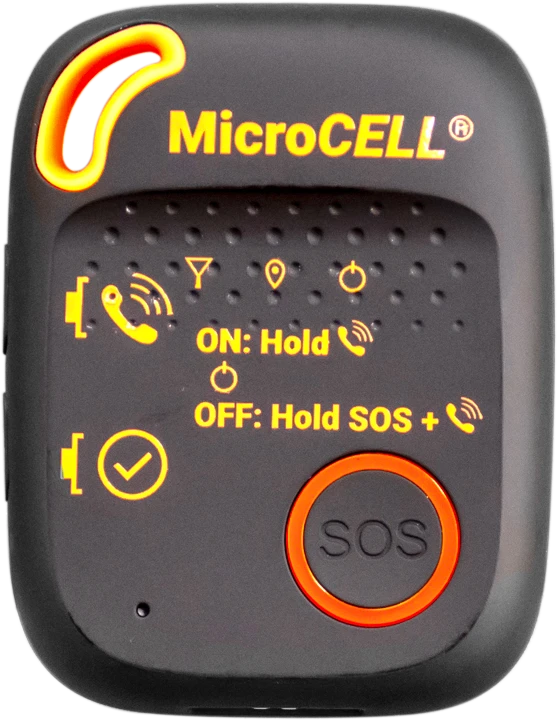
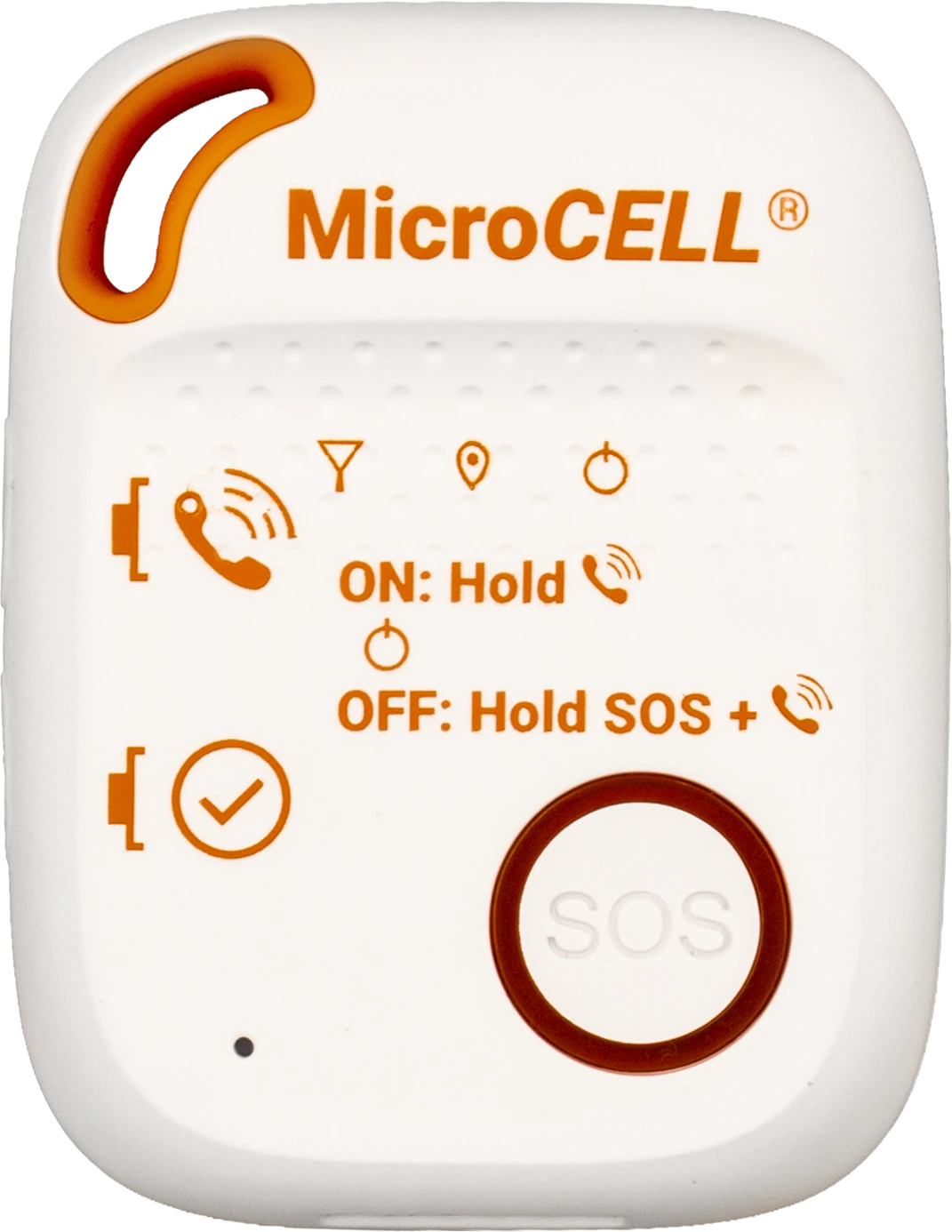
For harsher environments and those requiring specialized protection, the SuperCELL® (intrinsically safe) and WorkForce® wearables also integrate seamlessly with Grace Cloud Connect®. They share many of the same advanced features and functionality of MicroCELL® but communicate with the cloud via a secure RF platform and a Gateway.
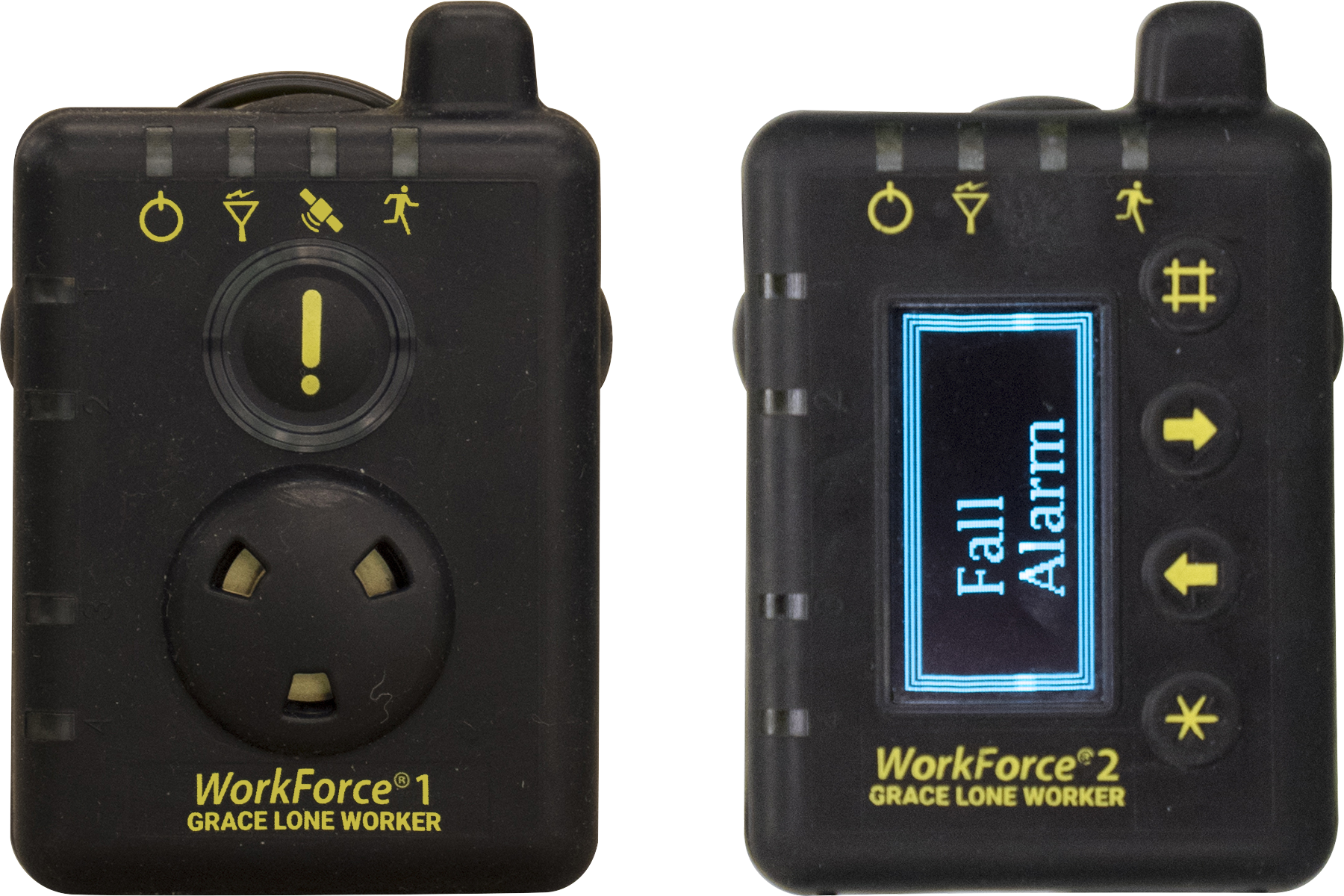
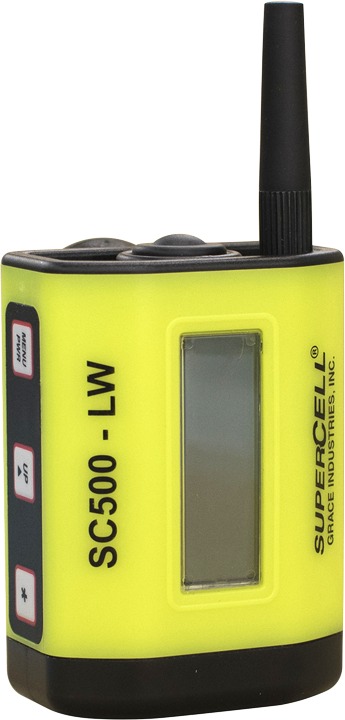
To learn more about MicroCELL®, SuperCELL®, WorkForce®, and Grace Cloud Connect®, visit graceindustries.com or contact us at 1-724-962-9231 or sales@graceindustries.com.
Next step
Hazard assessment turned up isolated workers?
We can help you scope a corrective measure that fits the exposure your plan already documents, whether that is cellular, RF, or both — no obligation.