Regulation & Compliance
Hotel Panic Button Compliance in the U.S.
There is no federal hotel panic button requirement, but there are three state laws and a dozen city ordinances, each with different room thresholds, device specifications and penalties. Here’s the current map.
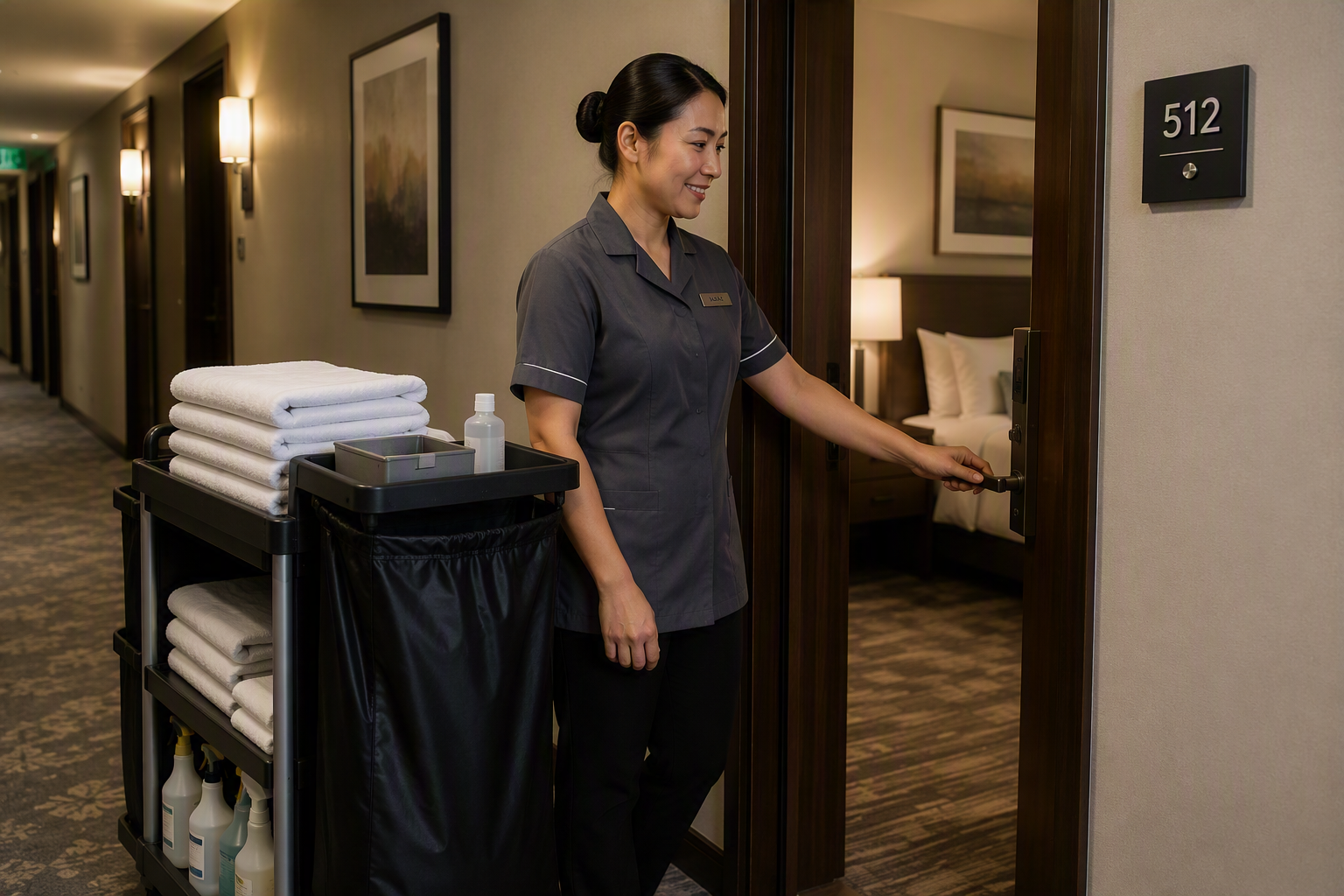
A housekeeper working alone in a guest room is one of the clearest lone-worker exposures in any service industry: a private space, a closed door, no colleague within earshot, and a stranger who may or may not be who the reservation says it is.
Since 2016 a patchwork of state laws and city ordinances have responded by requiring hotels to put a device in that worker’s hand. There is no federal requirement, which means compliance is entirely a question of each hotel’s location.
First: there is no federal mandate
OSHA is explicit: “There are currently no specific OSHA standards for workplace violence.” Enforcement runs through the General Duty Clause, OSH Act §5(a)(1), implemented through directive CPL 02-01-058 (effective January 10, 2017).
Notably, that directive’s named target industries are corrections, healthcare and social services, late-night retail, and taxi/livery. Hotels are not on the list.
So a hotel’s obligations come from state law, city ordinance, a collective bargaining agreement, or a brand standard — not from federal regulation.
State laws
New Jersey — the most detailed state law in the country
N.J.S.A. 29:4-9 et seq., operative section 29:4-11, enacted by P.L. 2019, c. 123. Regulations at N.J.A.C. 12:101. Signed June 11, 2019.
- Covers: hotels, inns, motels and boarding houses with 100 or more guest rooms; employees assigned to work in a guest room without any other employees present. Full-time, part-time and temporary, regardless of immigration status.
- Device: a two-way radio or other electronic device kept on the person, used to communicate with or otherwise effectively summon immediate on-scene assistance.
- Employer must: provide it at no cost including batteries and supplies; ensure prompt on-scene response; keep a 5-year record of guest accusations of violence, sexual assault, harassment or other inappropriate conduct; report alleged criminal conduct to law enforcement; notify housekeeping and room service staff of flagged guests and allow them to service with a partner or opt out; immediately reassign an activating employee away from that guest for the duration of the stay; maintain an education program; and advise guests through check-in terms or prominent large-font signs inside guest room doors.
- Anti-retaliation: the employee may cease work and leave the danger area, and no adverse action may be taken.
- Note: the device requirement does not apply if a collective bargaining agreement addresses the issuance of panic devices or otherwise addresses safety and reporting procedures.
- Penalties: up to $5,000 first violation, up to $10,000 subsequent. NJDOL began an active enforcement push in February 2024.
Illinois
Hotel and Casino Employee Safety Act, 820 ILCS 325, enacted as part of SB 75 (2019), P.A. 101-0221, effective March 1, 2021.
- Covers: hotels (including motels and inns) and casinos; employees working alone in guest rooms, restrooms, or on casino floors — including workers supplied through subcontractors or temp agencies.
- Device: a no-cost portable emergency contact device the employee can quickly and easily activate to alert security or management.
- Also required: a written anti-sexual-harassment policy covering immediate reporting, complaint procedures, instruction to leave the danger area, temporary reassignment to a different floor or station, paid time off for police reports and legal testimony, references to the Illinois Human Rights Act and Title VII, and a statement that retaliation is unlawful — distributed and posted in English and Spanish, plus other predominant languages where feasible.
- Enforcement: private right of action in circuit court; injunctive relief; compensatory damages capped at $350 per violation; attorney’s fees; each day is a separate violation. A 15-day notice-and-cure period applies before an employee representative may file.
- Chicago, IL also has its own specific requirements (Muni. Code § 4-6-180).
Washington — the broadest scope, and not just hotels
RCW 49.60.515, created by ESSB 5258 (2019), amended effective January 1, 2026. Implementing rule WAC 296-137-050, effective January 16, 2026.
- Covers: every hotel, motel, retail, or security guard entity, or property services contractor employing an isolated employee — defined as a janitor, security guard, hotel or motel housekeeper, or room service attendant who either works where two or more coworkers cannot immediately respond to an emergency, or spends at least 50% of working hours without a supervisor or coworker present. Contracted security guard companies licensed under ch. 18.170 RCW are exempt from the panic button duty.
- Original deadlines: hotels and motels with 60+ rooms by January 1, 2020; all other covered employers by January 1, 2021.
- Device specification — the most prescriptive in the country. It must be designed to be carried; simple to activate without passwords, sustained effort, multiple screens, or startup delay; provide a signal distinguishable from other alarms and not defeated by poor cell or Wi-Fi coverage; handle multiple simultaneous activations without one masking another; summon immediate assistance; allow responders to accurately identify the employee’s location; and work in all work locations on all shifts. Employers must keep purchase and usage records available to L&I.
- Also: sexual harassment policy, mandatory training for managers, supervisors and isolated employees including panic button use, and a resource list with EEOC, Washington Human Rights Commission and local advocacy contacts. Property services contractors file annual reports by January 31.
- Penalties (post-2025 amendment): $1,000 per willful violation; repeat willful violations within 3 years run $2,000–$10,000 each. Complaint filing opened January 1, 2026.
- Seattle, WA also has its own specific requirements (SMC ch. 14.26).
States with no statewide law
As of this writing, California, New York, Nevada and Florida have no statewide hotel panic button mandates. California and Florida are governed entirely by city ordinances; New York’s requirement operates at the New York City level. Nevada’s 2025 SB 360 addressed room cleaning frequency and safety inspections in large hotels but did not mandate safety devices.
The requirements in each city ordinance are comparable to the state laws in New Jersey, Illinois and Washington, including the requirement of a panic button for certain hotel staff. For the majority of these cities, the number of hotel rooms doesn’t matter – if you’re a hotel, you are required to provide a panic button at no cost to your employees, depending on role. See the ordinance for details for each city.
| Jurisdiction | Ordinance |
|---|---|
| Long Beach, CA | LBMC ch. 5.49 |
| Santa Monica, CA | SMMC ch. 4.67 |
| Oakland, CA | OMC ch. 5.93 (Measure Z) |
| Sacramento, CA | City Code ch. 5.78 |
| West Hollywood, CA | HWPO |
| Los Angeles, CA | LAMC ch. 28, art. 2 |
| LA County, CA | County HWPO |
| Glendale, CA | Ord. 5991 / GMC ch. 5.120 |
| Miami Beach, FL | Code ch. 62, art. VI |
| New York, NY | Safe Hotels Act |
Voluntary commitments: useful, but not a compliance strategy
The AHLA 5-Star Promise, launched September 2018, committed nearly 60 member companies covering roughly 20,000 properties and 1.2 million employees to five pillars, one of which is Employee Safety Devices.
AHLA reports that more than 5,000 hotels have implemented employee safety devices and that “nearly all these hotels have implemented four pillars of the pledge.” No deadline was ever set for device deployment, and AHLA now points members toward a state-law tracker — which tells you that adoption is being driven by jurisdiction, not by the pledge.
The 5-Star Promise is a genuine industry commitment. It is not an enforceable standard, and device deployment materially lags the other four pillars.
What this means operationally
- Inventory your properties by location. Compliance is property-by-property, not brand-by-brand. A management company running twelve hotels across four states may have four different obligations and three properties with none.
-
Buy to the strictest specification you’re subject to. Washington’s is the
benchmark: carried on the person, activated without passwords or delay, a distinguishable signal,
not defeated by poor cell or Wi-Fi coverage, multiple activations that don’t mask
each other, and accurate location identification for responders.
That last two matter more than they sound. A device that summons help but can’t say which room leaves security searching a floor. And “not defeated by poor cell or Wi-Fi” is a real specification, not boilerplate — hotel construction is unkind to wireless signal, and stairwells, sub-basements, laundry and back-of-house are exactly where coverage fails and where a lone worker is most isolated. Survey the property for cell and/or Wi-Fi coverage before you commit to a system.
- Don’t stop at the device. Every one of these laws pairs the device with obligations: written policies in specified languages, posted notices in specified font sizes, training within specified windows, guest-accusation records held 2 to 5 years, reassignment procedures, and paid time off for police reports.
- Check for updates before you rely on this. This area moves fast — Washington amended its penalties effective January 2026, LA County’s ordinance took effect April 2026 with training phasing in that October. Verify current requirements with counsel or the enforcing agency before making compliance decisions.
About Grace Industries
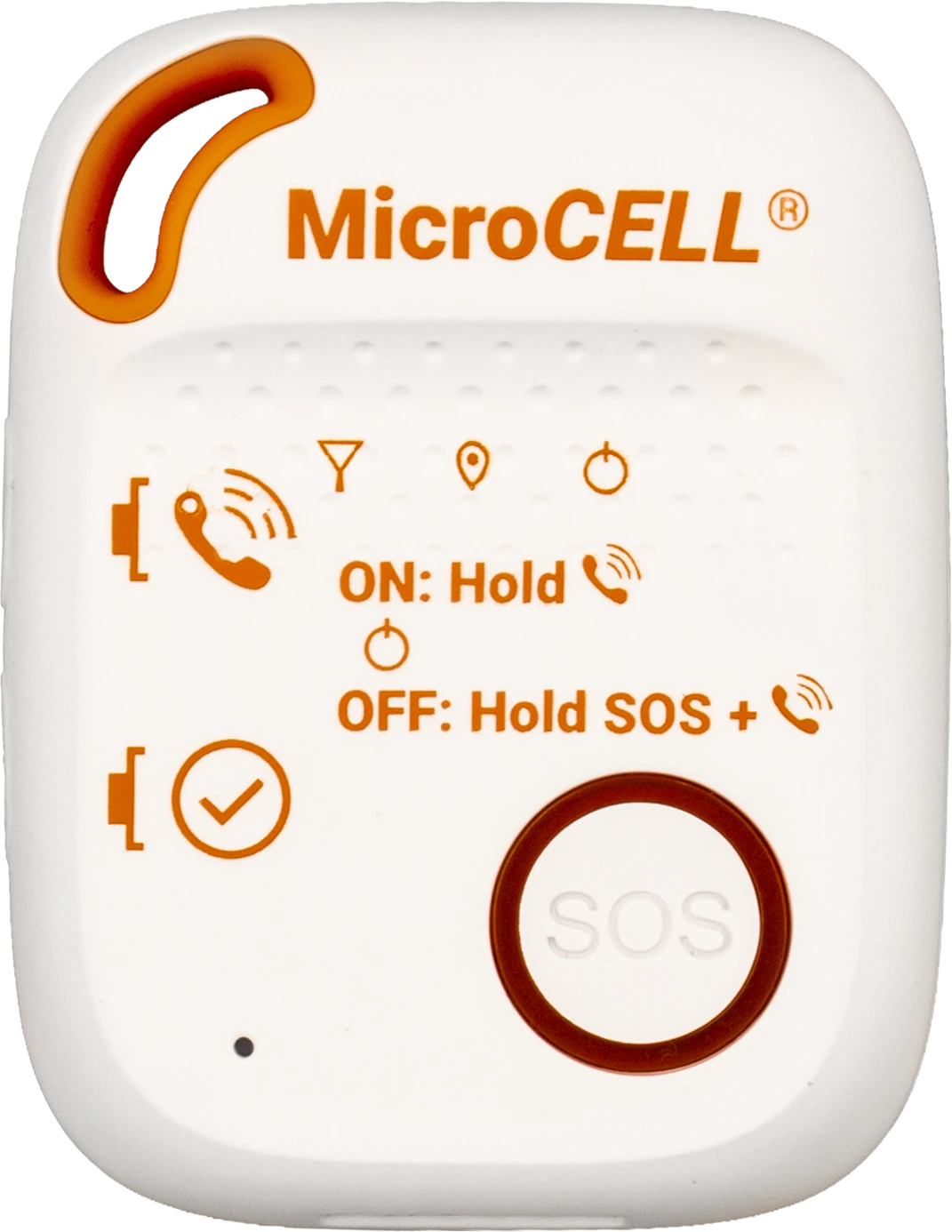
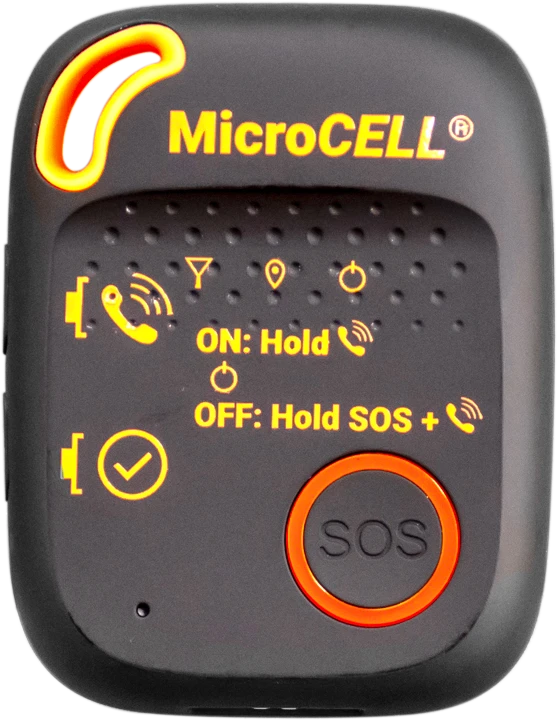
Grace Industries has been protecting lone workers for over 50 years. MicroCELL® is a 1.9-ounce, IP67-rated wearable that acts as a monitored personal emergency transmitter. It features custom scheduled check-ins, a dedicated one-touch SOS button, configurable fall detection and no-motion alarm, and GPS location reported with alerts. Available on a voice or data plan, it connects over 4G LTE to Grace Cloud Connect® web and mobile apps. There, alerts escalate to multiple recipients based on your custom protocols. Every check-in, alert, and escalation is automatically logged into a timestamped activity history. To learn more about MicroCELL and Grace Cloud Connect®, visit graceindustries.com or contact us at 1-724-962-9231 or sales@graceindustries.com.
This article is general information, not legal advice. It was drafted with the assistance of AI which can make mistakes. You should consult with a lawyer or the enforcing agency before making compliance decisions.
Next step
Equipping housekeepers across more than one jurisdiction?
We can walk your properties through the device specification that applies to each one, and help you survey coverage before you commit to a system — no obligation.